7 Dental Crown Alternatives for Damaged Teeth
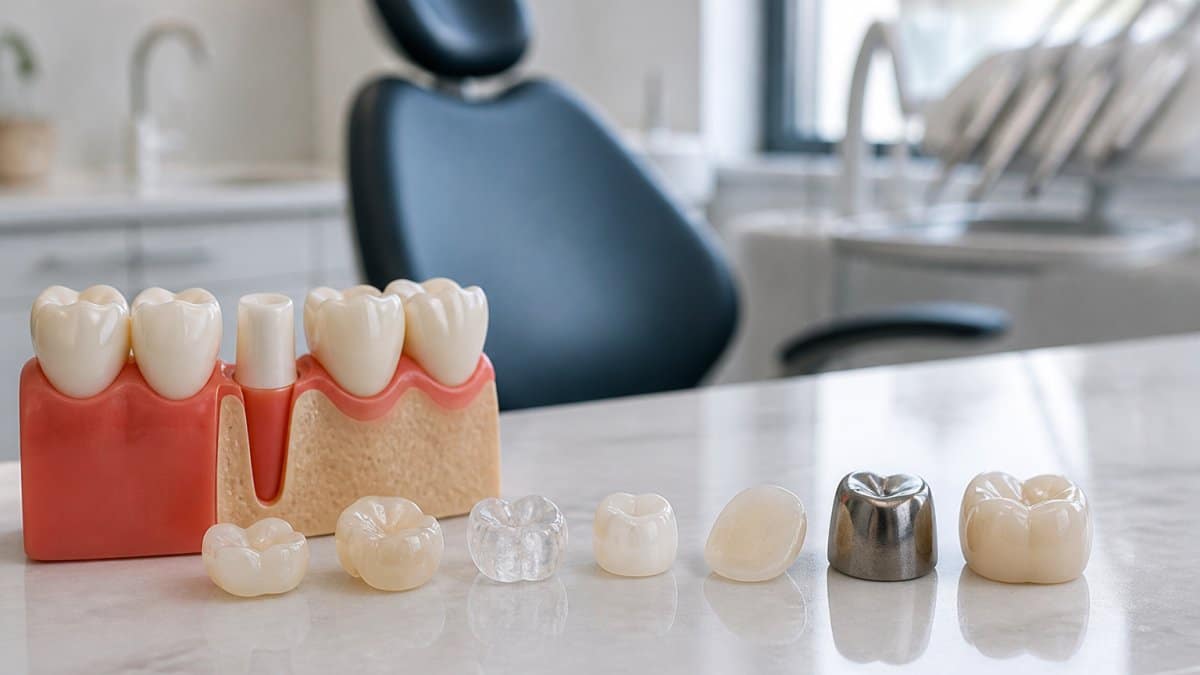
7 Dental Crown Alternatives for Damaged Teeth
Last Updated: November 1, 2026
Quick Summary
Dental crown alternatives for damaged teeth include onlays, three-quarter crowns, composite fillings, dental bonding and veneers, each covering less of the tooth than a full crown. The right choice depends on how much sound tooth structure remains, where the tooth sits in the mouth and how heavy the chewing forces are.
- A crown covers the entire tooth above the gum line, while an onlay covers only the cusps and damaged areas.
- Composite fillings work best for small to moderate decay where the remaining tooth walls are sound.
- Veneers and bonding are cosmetic options that do not reinforce a structurally weak tooth.
- Durability rises with coverage, but so does the amount of healthy tooth you lose.
- Ask for a written estimate and check what each quote includes before deciding between options.
Table of Contents
- When a Dental Crown Is Recommended and When It Isn’t
- Dental Onlay vs Crown: How Much Tooth Each One Covers
- Tooth-Coloured Fillings for Damaged Teeth: Where They Work Best
- Treatment Options for a Cracked Tooth
- What Happens If You Don’t Get a Crown After a Root Canal
- Veneers and Bonding: Cosmetic Alternatives for Front Teeth
- Comparing Dental Crown Alternatives Side by Side
- Book a Consultation to Discuss Your Options
- Frequently Asked Questions
When a Dental Crown Is Recommended and When It Isn’t
A dental crown is a custom-made cap that covers a damaged tooth to restore its strength, shape and appearance. It is one of the most reliable full-coverage restorations in restorative dentistry, but it is not the only option. A dentist assesses each damaged tooth individually before recommending treatment, because suitable alternatives to a crown can preserve more of your natural tooth structure.
Signs a damaged tooth may need full coverage
Full coverage is usually considered when a tooth has lost a significant amount of structure. Common triggers include a large fracture, heavy decay after a filling has been removed, a tooth that has had root canal treatment, or a crack that extends below the gum line. In these cases, the remaining walls of the tooth are too weak to hold a simple filling under normal chewing forces.
When a more conservative option may suit
A conservative option may suit you when the damage is limited to one surface or one cusp, when the tooth still has strong walls, or when the problem is mainly cosmetic. Many patients ask whether they can avoid a crown entirely.
Watch out: choosing a conservative option on a tooth that genuinely needs full coverage can lead to the tooth splitting later, which may make it unsalvageable.
Dental Onlay vs Crown: How Much Tooth Each One Covers
The main difference between a dental onlay and a crown is coverage. A crown covers the entire tooth above the gum line.
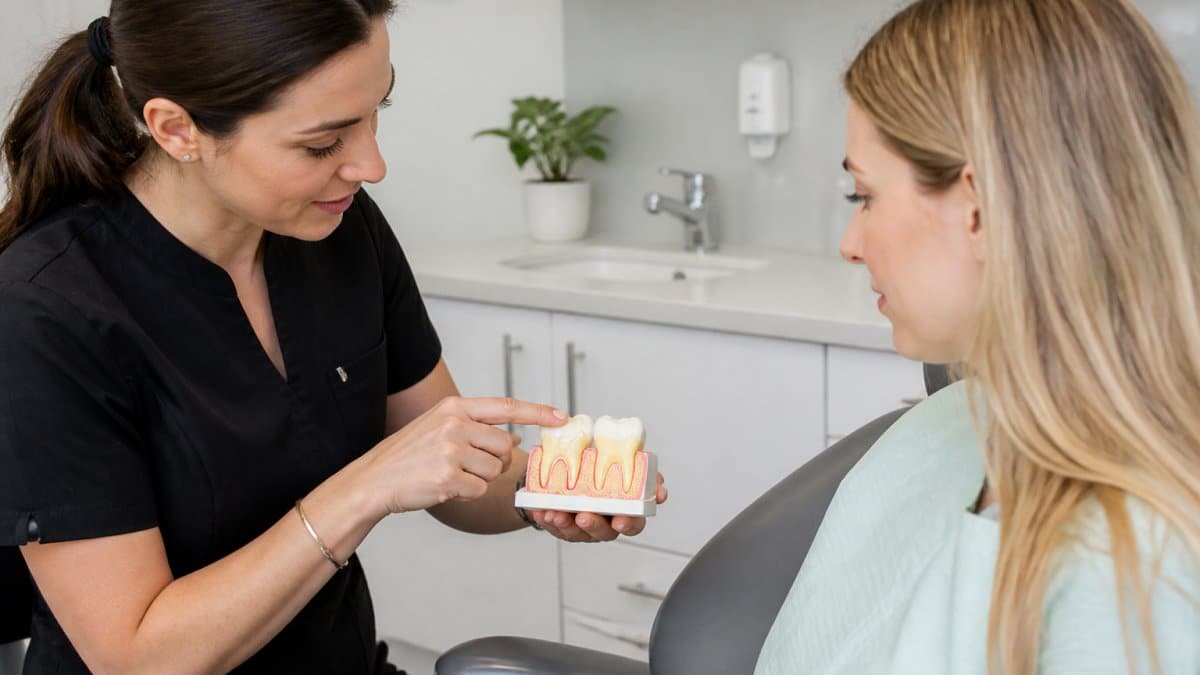
This distinction matters because every bit of tooth you keep is a bit you never have to replace.
Onlays require precise fitting and bonding, and they are not suitable for every fracture pattern. Where the crack runs deep or the tooth is heavily compromised, a full crown remains the safer choice.
Matching the damage pattern to the restoration
A useful way to think about the choice is to match the damage pattern to what the restoration must do. The table below sets out common patterns and the options that are usually considered, but it is a guide only: an examination and often a radiograph are needed to confirm what is happening beneath the surface.
| Damage pattern | What the restoration must do | Options usually considered |
|---|---|---|
| Small chip on a front tooth edge | Restore appearance and a smooth edge | Bonding, veneer |
| Cracked cusp on a back tooth, remaining walls sound | Replace the cusp and protect it from further fracture | Onlay, three-quarter crown |
| Large fracture or heavy decay after an old filling is removed | Hold the remaining walls together under chewing load | Full crown, sometimes onlay if enough sound structure remains |
| Crack extending below the gum line | Seal and support the tooth; may need periodontal assessment | Full crown, sometimes extraction if unsalvageable |
| Tooth that has had root canal treatment with significant structure loss | Protect against fracture under biting force | Full crown; bonding or veneer only if minimal loss |
Why tooth location changes the answer
Front teeth and back teeth are asked to do different jobs, and that changes the balance between appearance and strength. Front teeth are visible and take lighter biting forces, so a veneer or bonding can often restore a chip or minor crack without full coverage.
A common pattern is that the same damage on a front tooth and a back tooth leads to different recommendations, not because one tooth matters more, but because the forces and appearance priorities differ.
Choosing a conservative option on a tooth that genuinely needs full coverage can lead to the tooth splitting later, which may make it unsalvageable. If a dentist advises full coverage, ask what specifically about the remaining tooth structure drives that recommendation.
Tooth-Coloured Fillings for Damaged Teeth: Where They Work Best
Tooth-coloured fillings made from composite resin work best for small to moderate areas of decay or a minor chip, where the damage is contained and the remaining walls of the tooth are sound. They bond directly to the tooth, restore a natural appearance and usually need only one visit.
They are less suitable for large cavities or teeth that take heavy chewing forces at the back of the mouth, because composite alone cannot reinforce a weakened tooth the way a full-coverage restoration can. If you want to see how we approach this treatment, you can read more about white fillings and what the procedure involves.
Treatment Options for a Cracked Tooth
A cracked tooth is not one condition, and treatment depends on where the fracture sits and how deep it runs. A small chip on the edge of a front tooth may need nothing more than dental bonding or a veneer.
When the crack extends into the dental pulp, root canal treatment is usually needed first, followed by full coverage to protect what remains. For a closer look at repairing chips and cracks, our guide on how to fix a chipped tooth permanently covers the options in more depth.
What Happens If You Don’t Get a Crown After a Root Canal
Skipping a crown after root canal treatment leaves the tooth at real risk. A tooth that has had root canal treatment no longer has its blood supply, which makes it more brittle, and it has often lost a large amount of structure to decay and access.
That said, not every root-treated tooth automatically needs a crown. A front tooth with minimal loss of structure may be restored with bonding or a veneer. If you want to understand the procedure itself first, read our step-by-step explanation of what happens during a root canal.
Veneers and Bonding: Cosmetic Alternatives for Front Teeth
Veneers and bonding are the two most common cosmetic alternatives for front teeth, and both preserve far more enamel than a crown. Dental veneers are thin, custom-made shells of porcelain bonded to the front surface, ideal for discolouration, minor chips and small gaps. Dental bonding uses composite resin applied directly and shaped by the dentist, usually in a single visit.
Neither reinforces a structurally weak tooth. They are cosmetic solutions, not structural ones, so they suit teeth where the damage is superficial. If you are weighing bonding against other options, our guide on whether composite bonding is worth it sets out the honest pros and cons.
Comparing Dental Crown Alternatives Side by Side
The table below summarises how each option compares on the factors that matter most: how much tooth is removed, how much is covered, how long it tends to last, whether it can be reversed, and what ongoing maintenance it tends to need.
| Option | Tooth removed | Coverage | Typical longevity | Reversible | Maintenance and repair |
|---|---|---|---|---|---|
| Composite filling | Minimal | Small to moderate area | Moderate; may need replacement | Yes, in principle | Can be repaired or added to; stains and wears over time |
| Dental bonding | Minimal to none | Front surface only | Shorter; chips and stains over time | Yes | Can be repaired or polished; may need refresh |
| Veneer | Some front enamel | Front surface | Long with good care | Not fully | Repairable in some cases; replacement may be needed |
| Inlay | Moderate | Inside the cusps | Good | No | Bonded; repair depends on the material |
| Onlay / partial crown | Moderate | Cusps and damaged areas | Good | No | Bonded; repair depends on the material and fit |
| Full crown | More | Entire tooth above gum | Long | No | Can sometimes be repaired; replacement eventually likely |
Two things stand out. First, durability rises with coverage, but so does the amount of healthy tooth you lose. Second, the more conservative options are easier to repair but wear faster.
How to weigh the trade-offs
A practical way to use the table is to ask three questions in order. First, how much sound tooth structure remains? If the walls are thin or the crack runs deep, the options that preserve more tooth may not be strong enough. Second, where is the tooth? Front teeth favour appearance-led options; back teeth favour strength-led options. Third, what is the repair path if something goes wrong?
Cost and coverage questions to ask
Private treatment fees vary by practice and by the complexity of the tooth, so you should request a written estimate at consultation. When comparing quotes, ask what is included: the restoration itself, any preparatory treatment such as root canal treatment, temporary restorations, and follow-up reviews. If you have dental insurance, check with your provider which treatments are covered. Some options may need replacing sooner, which affects the long-term picture as much as the initial fee.
The cheapest option at the outset is not always the lowest cost over time. Ask for the expected lifespan and the likely repair or replacement path for each option before deciding.
Book a Consultation to Discuss Your Options
Choosing between a crown and a more conservative restoration is a clinical decision. A dentist needs to examine the tooth and assess how it sits in your bite before recommending anything.
A consultation is a good opportunity to talk through each option in plain terms, including the trade-offs, so you can decide with confidence. If you are ready to discuss which treatment suits your tooth, book a private dental consultation and we will assess your options together.
Frequently Asked Questions
Can an onlay be used instead of a dental crown?
Yes, an onlay can replace a crown when damage is moderate and the cusps are partly intact. An onlay, sometimes called a partial crown, covers the chewing surface and some cusps but leaves more healthy enamel in place. Your dentist will assess remaining tooth structure, the position of the tooth and your bite before recommending one. If the tooth is heavily fractured or has had root canal treatment, a full crown may still be the safer choice.
What happens if I don’t get a crown after a root canal?
A tooth that has had root canal treatment no longer has its blood and nerve supply, which makes it more brittle. Without a crown to hold it together, it can fracture under chewing forces, sometimes below the gum line where repair is difficult. That can lead to extraction. Your dentist will explain the risk for your specific tooth, as not every back tooth needs full coverage, but leaving a treated tooth unrestored long term raises the chance of failure.
Can a filling repair a badly damaged tooth?
A filling works well for small to moderate cavities and minor chips, but it is not designed to rebuild a tooth that has lost a cusp or a large section of its structure. In those cases, an onlay or crown provides more support. Composite bonding can also repair small chips and cracks on front teeth. Ask your dentist to show you how much healthy tooth remains, as that usually decides whether a filling is enough.
Are dental crown alternatives cheaper than a crown?
Often they are, but it depends on the option and the tooth. Fillings and bonding usually cost less than a crown, while onlays sit somewhere between the two. Private practices set their own fees, so ask for a written treatment plan with costs before deciding. Also check whether any part of your treatment is covered, and factor in that a cheaper option may need replacing sooner, which affects the long-term total.
How do dentists decide whether a damaged tooth can be saved?
Your dentist looks at how much healthy tooth structure remains above the gum line, whether the crack or decay reaches the pulp, the tooth’s position and your bite. X-rays and sometimes a scan help confirm the extent of damage. If the tooth can be rebuilt with enough sound structure to support a restoration, it can usually be saved. If the fracture runs deep below the gum, extraction may be the more predictable option.
A damaged tooth rarely gets better on its own, and the longer you wait, the fewer conservative options remain. At Smile Design Studio, we offer personalised treatment plans, advanced equipment and a calm, modern environment where your comfort comes first. Get started with Smile Design Studio and find the right restoration for your tooth before the damage decides for you.

Related posts