Can You Get a Smile Makeover With Gum Disease?

Can You Get a Smile Makeover With Gum Disease?
Last Updated: November 8, 2026
Quick Summary
Yes, you can get a smile makeover with gum disease, but only once the disease is under control. Gum disease must be treated and your gums stable before any cosmetic work such as veneers, crowns, whitening or bonding begins. Treat first, then design.
- Active gum disease needs treatment first, while a stable history usually needs a check and maintenance plan.
- Non-surgical periodontal therapy is often split across two or more appointments under local anaesthetic.
- Gums are typically re-measured six to twelve weeks after treatment to check healing.
- Periodontal maintenance visits are often every three to six months rather than the standard six-month check.
- A gum graft may be needed before a smile makeover to rebuild the gum line over exposed roots.
Table of Contents
- Why Gum Health Comes Before Any Smile Makeover
- Gum Disease Treatment Before Cosmetic Dentistry: What Comes First
- Can You Get Veneers With Gum Disease?
- How Long After Gum Disease Treatment Can You Get Veneers?
- Receding Gums, Exposed Roots and a Gum Graft for Smile Makeover
- Options Beyond Veneers When Your Gums Need Work
- Keeping Your Results: Maintenance After a Smile Makeover
- Book a Gum Health Assessment Before Your Smile Makeover
- Frequently Asked Questions
Why Gum Health Comes Before Any Smile Makeover
Can you get a smile makeover with gum disease? Yes, but only once the disease is under control. A smile makeover is a planned set of cosmetic dental treatments, such as veneers, crowns, whitening or bonding, that changes how your smile looks.
At Smile Design Studio, we explain this to patients every week. Gums are the foundation. Cosmetic work placed on inflamed, bleeding gums tends not to last, and it can make the underlying problem worse.
The NHS overview of gum disease is clear that gum disease is common and treatable, but it needs proper care. So the honest answer to “can you get a smile makeover with gum disease” is: treat first, then design.
Active Gum Disease Versus a History of Gum Disease
There is a big difference between active gum disease and a history of it. Active gum disease means your gums are inflamed right now. You may have bleeding when you brush, swelling, bad breath or loose teeth. A history of gum disease means you had it before and it is now stable and monitored.
This distinction matters for your treatment plan. Active disease needs treatment first. A stable history usually just needs a check and a maintenance plan before cosmetic work can go ahead.
Gum Disease Treatment Before Cosmetic Dentistry: What Comes First
Gum disease treatment before cosmetic dentistry always comes first in the sequence. Your dentist will not start cosmetic work until your gums are stable. This protects both your health and your investment.
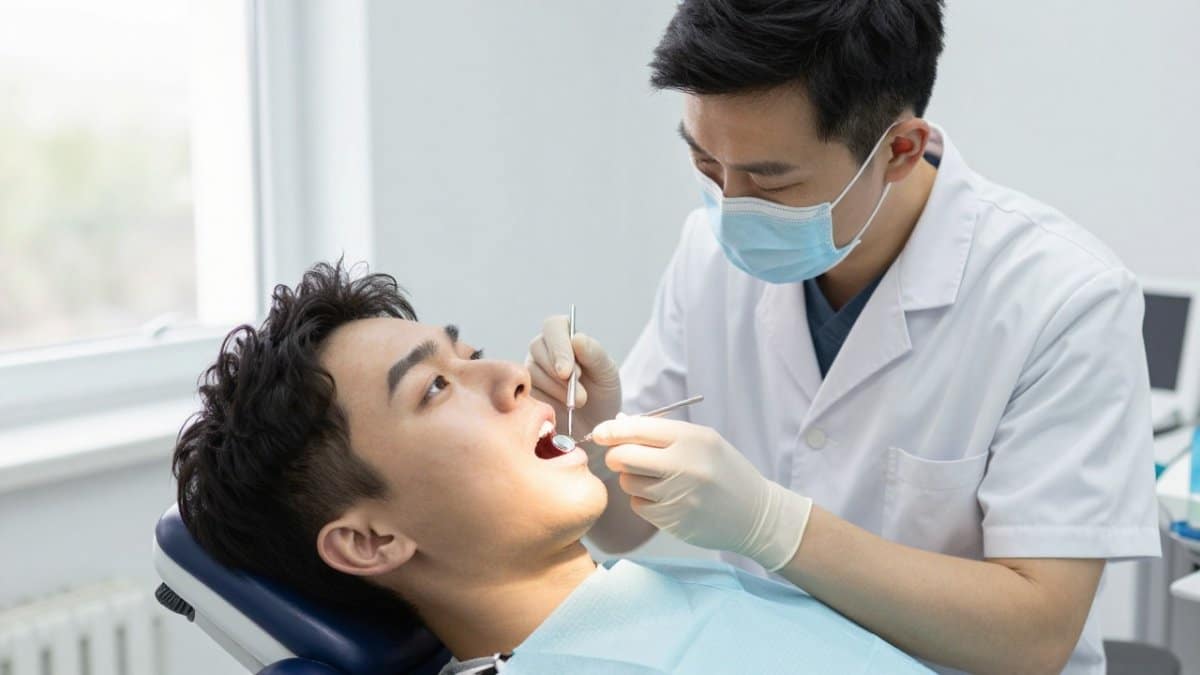
Dental teams generally follow a predictable pathway. The exact number of visits varies with the severity of the disease:
- Full periodontal assessment. Your dentist or periodontist records bleeding on probing, pocket depths around each tooth, gum recession, tooth mobility and any bone loss visible on radiographs. This establishes a baseline against which later improvement is measured.
- Oral hygiene instruction and risk-factor review. You are shown how to clean along the gum line and between the teeth, and asked about smoking, diabetes control and any medicines that affect the gums. These factors influence how quickly the disease settles.
- Non-surgical periodontal therapy. This is the deep clean, also called scaling and root planing, usually carried out under local anaesthetic and often split across two or more appointments. Its purpose is to remove bacterial deposits from below the gum line.
- Reassessment after healing. The gums are re-measured, typically around six to twelve weeks after treatment, to see how the tissues have responded. Bleeding should be reduced and pockets should be shallower.
- Periodontal maintenance. Stable gums are kept stable with regular hygiene visits at intervals your dentist sets, often every three to six months rather than the standard six-month check.
- Cosmetic planning and treatment. Only once the gums are stable and maintained does planning for veneers, crowns, whitening or bonding begin.
Watch out: booking a cosmetic consultation before the periodontal assessment is complete can lead to a treatment plan that has to be abandoned or reworked once the true state of the gums is known.
How Readiness Is Measured and Who Decides
Your dentist decides when you are ready, based on clear signs. These include less bleeding on probing, firmer gum tissue, stable pocket depths and no further recession between visits.
Readiness is not about how your teeth look. It is about whether your gums can support the work. We tell patients that the decision is clinical, not cosmetic.
A useful way to think about it is that readiness is judged over time, not at a single appointment.
The NHS overview of gum disease is clear that gum disease is common and treatable, but it needs proper care.
Here is the treatment pathway your dental team generally follows before any cosmetic work begins.
| Step | What happens | Timing or frequency |
|---|---|---|
| Full periodontal assessment | Records bleeding, pocket depths, recession, mobility and bone loss | Baseline before treatment |
| Oral hygiene instruction and risk-factor review | Cleaning along gum line; smoking, diabetes and medicines reviewed | Before therapy |
| Non-surgical periodontal therapy | Deep clean, scaling and root planing under local anaesthetic | Often split across two or more appointments |
| Reassessment after healing | Gums re-measured to see how tissues responded | Typically six to twelve weeks after treatment |
| Periodontal maintenance | Regular hygiene visits to keep gums stable | Often every three to six months |
| Cosmetic planning and treatment | Planning for veneers, crowns, whitening or bonding begins | Only once gums are stable and maintained |
Can You Get Veneers With Gum Disease?
You can get veneers with gum disease, but only after it is treated and stable. Veneers sit on the front of your teeth, right at the gum line. If your gums are inflamed, they can recede or change shape after the veneers are fitted. That can leave visible edges or an uneven gum line.
Veneers are thin shells that cover the front of a tooth to improve its shape, colour or alignment. They look natural when the gums are healthy. On unhealthy gums, even good veneers can look wrong over time.
A common mistake is booking cosmetic work before a gum check. We always recommend a full dental assessment first.
What Your Dentist Checks Before Agreeing to Veneers
Before veneers are planned, your dentist will usually confirm several things: (Source: guidance on maintaining good oral hygiene)
- Bleeding on probing is minimal or absent around the teeth being treated.
- Pocket depths are within a stable range and have not worsened between visits.
- Gum margins are not actively receding, because a veneer placed on a receding margin will soon show a dark edge or a gap.
- Tooth mobility is normal, since loose teeth cannot reliably support bonded restorations.
- The bite is stable, because heavy or uneven contacts can chip veneers and stress the gums.
These checks are not a single test but a pattern observed over time. Your dentist will advise what stability is needed in your case before cosmetic work is scheduled.
Active Disease Versus a Stable History
The distinction matters most for veneers. With active disease, the priority is treatment, and veneers are deferred. With a stable history, the priority is confirming that stability is being maintained, and veneers can usually proceed once your dentist is satisfied.
Watch out: if you have untreated active gum disease and go ahead with veneers anyway, the gums can continue to recede beneath the veneers, exposing the tooth root and the veneer edge. Correcting that may mean removing and remaking the veneers after the gums are treated, with additional cost and disruption.
How Long After Gum Treatment Can Veneers Be Fitted?
There is no single timeline that suits everyone. The time needed depends on the severity of the disease, how the gums respond to treatment and whether surgery such as a gum graft is needed. Your dentist will confirm when your gums are stable enough for cosmetic work.
Your dentist will confirm when your gums are stable. Rushing the cosmetic stage is where problems start. If you want to plan the whole process, our guide on how to plan your smile makeover timeline walks through each stage from gum care to the finished result.
How Long After Gum Disease Treatment Can You Get Veneers?
The time between gum treatment and veneers varies from person to person. The exact time depends on how your gums heal and how severe the disease was. Your dentist will confirm when your gums are stable.
There is no single timeline that suits everyone. Some patients settle quickly. Others need longer, especially if they had deep pockets or bone loss. Rushing the cosmetic stage is where problems start.
If you want to plan the whole process, our guide on how to plan your smile makeover timeline walks through each stage from gum care to the finished result.
Receding Gums, Exposed Roots and a Gum Graft for Smile Makeover
Receding gums expose the roots of your teeth. This can make teeth look long, cause sensitivity, and raise the risk of decay on the exposed root. A gum graft may be needed before a smile makeover to rebuild the gum line.
A gum graft involves placing gum tissue over an exposed root, and it may be recommended before cosmetic work so the final gum line can look even. Your dentist will advise whether it suits your case.
Gum restoration can also include other periodontal treatment. Your dentist will advise what suits your case.
Options Beyond Veneers When Your Gums Need Work
Veneers are not the only route. When your gums need work, other options may suit you better at first. These include:
- Composite bonding, which can be adjusted as gums settle
- Dental crowns for damaged teeth
- Teeth whitening once gums are healthy
- Gum restoration before any cosmetic work
If you are weighing veneer types, our guide on composite vs porcelain veneers compares them in detail. The right choice depends on your gum health, your goals and your dentist’s advice.
Keeping Your Results: Maintenance After a Smile Makeover
Maintenance after a smile makeover is what keeps your results lasting. Cosmetic work does not make you immune to gum disease. In fact, looking after your gums matters just as much afterwards.
Good home care and regular maintenance visits help protect your results. Brush gently along the gum line, clean between your teeth, and attend your check-ups. Our oral health products and guidance can support your daily routine.
Book a Gum Health Assessment Before Your Smile Makeover
The safest first step is a gum health assessment. It tells you whether your gums are ready, or what needs treating first.
We provide personalised treatment plans and a comprehensive range of care, from routine check-ups to cosmetic dentistry. If you have been putting off a visit, we understand, and we aim to offer a calm, patient-centred environment for nervous patients.
Your gums decide what your smile makeover can safely achieve. Get your gum health checked first, then plan the cosmetic work with a clear, personalised treatment plan. Get started with Smile Design Studio and build a healthy, lasting smile.
Frequently Asked Questions
Can you get a smile makeover if you have gum disease?
You can have a smile makeover, but not while gum disease is active. Dentists usually treat and stabilise the gums first, then plan cosmetic work once inflammation has settled and your gum health is stable. Starting a smile makeover on inflamed gums risks recession, loose veneers and poor healing. The order matters: assessment, periodontal treatment, a healing period, then cosmetic work, followed by regular maintenance visits.
Do you need to treat gum disease before getting veneers?
Yes. Veneers bond to enamel and rely on healthy gum tissue and bone support to look right and last. If gum disease treatment before cosmetic dentistry is skipped, bleeding gums, periodontal pockets and tooth mobility can undermine the result. Your dentist will usually carry out a full dental assessment, including pocket depth measurements, before agreeing to any veneer treatment plan.
How long after gum disease treatment can you have cosmetic dental work?
There is no single timeframe. It depends on how severe the disease was, how well your gums respond and whether you needed a gum graft or other gum restoration. Dentists generally wait until bleeding gums have resolved and pocket depths have improved before starting veneers or other cosmetic treatment. Your periodontist or dentist will confirm when your gums are stable enough.
Can a smile makeover include treatment for receding gums?
Yes. Receding gums and exposed roots are often part of the plan rather than a barrier to it. Your dentist can assess whether gum restoration is needed and advise on the order of treatment ahead of any cosmetic stages.

Related posts