Composite vs Porcelain Crowns: Which Lasts Longer?
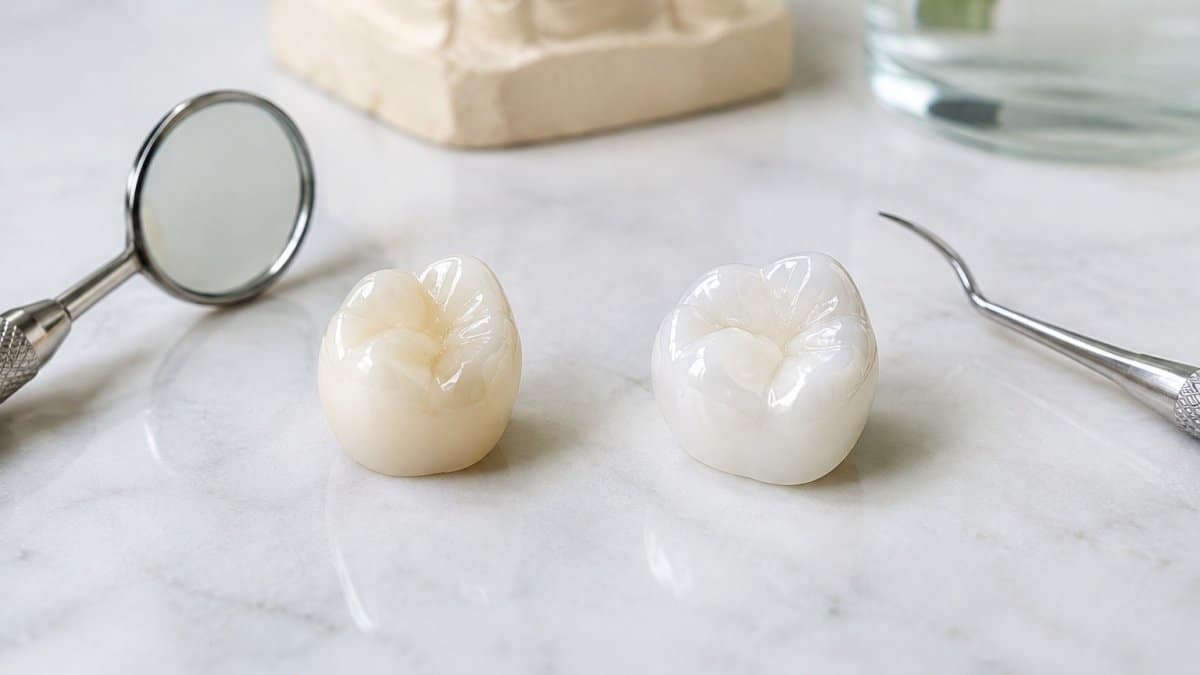
Composite vs Porcelain Crowns: Which Lasts Longer?
Last Updated: November 4, 2026
Quick Summary
Porcelain and ceramic crowns generally outlast composite resin ones for crowns durability, often lasting 10 to 15 years or more, while composite crowns typically last 3 to 7 years. The right choice depends on where the tooth sits, how hard you bite, and what you want it to look like.
- Composite resin crowns typically last 3 to 7 years before needing replacement.
- Porcelain and ceramic crowns are more resistant to staining and heavy chewing than composite.
- Heavy chewing forces or bruxism shorten crown lifespan regardless of material.
- A poorly sealed crown can allow bacteria in and cause decay at the margin.
- Composite requires less tooth preparation, preserving more natural tooth structure.
Table of Contents
- Composite vs Porcelain Crowns: A Quick Comparison
- What Is a Dental Crown and When Is It Needed?
- Composite Resin Crown Pros and Cons
- Porcelain and Ceramic Crowns: Strength and Aesthetics
- Dental Crown Lifespan UK: What to Expect
- Signs a Dental Crown Needs Replacing
- Material Science and Long-Term Cost: What Most Guides Miss
- Book a Crown Consultation at Smile Design Studio
- Frequently Asked Questions
Composite vs Porcelain Crowns: A Quick Comparison
If you are weighing composite vs porcelain crowns durability, the short answer is that porcelain and ceramic crowns generally outlast composite resin ones. Porcelain and zirconia crowns are often reported to last 10 to 15 years or more, while composite crowns are often replaced sooner. The right choice depends on where the tooth sits, how hard you bite, and what you want it to look like. A dentist can advise on the best option for your situation.
A dental crown is a cap that covers a damaged tooth to restore its shape, strength and appearance. Both materials protect a weakened tooth from fracture under chewing forces. The difference lies in how they wear, stain and hold up over time.
Below, we break down each material, what affects lifespan, and how to tell when a crown needs replacing, so you can make a confident decision with your dentist.
Here is how the two crown materials compare on the points that matter most for durability.
| Material | Typical lifespan | Key strength | Key weakness |
|---|---|---|---|
| Porcelain and ceramic (incl. zirconia) | 10 to 15 years or more | More resistant to staining and heavy chewing | Higher initial cost; harder to repair if chipped |
| Composite resin | 3 to 7 years | Lower upfront cost; minimal tooth preparation | More prone to staining and wear |
What Is a Dental Crown and When Is It Needed?
A dental crown is a custom-made restoration that covers the whole visible part of a tooth. It is bonded over the prepared tooth to protect it from chewing forces and further decay.
Dentists may recommend a crown when a tooth is too damaged for a filling, such as after a large cavity, a cracked tooth, or root canal treatment (Crowns). A crown can help restore the tooth’s shape and strength. Whether a crown is suitable is a matter for a consultation with a qualified dentist.
If you would like to understand the alternatives before committing to a crown, you can read our guide to dental crown alternatives for damaged teeth.
Composite Resin Crown Pros and Cons
Composite resin crowns are made from a tooth-coloured resin material. Their suitability and cost compared with other options should be discussed at a consultation.
Pros:
- Lower upfront cost than porcelain
- Minimal tooth preparation, preserving more natural tooth structure
- Easy to repair chairside if minor damage occurs
- Good shade matching to your natural teeth
Cons:
- Shorter lifespan, typically 3 to 7 years
- More prone to staining from coffee, tea and tobacco
- Less resistant to heavy chewing forces than ceramic
- Higher chance of needing replacement sooner
If you are also weighing material choices for veneers, our comparison of composite versus porcelain veneers explains the same trade-offs in more detail.
Porcelain and Ceramic Crowns: Strength and Aesthetics
Porcelain and ceramic crowns, including zirconia and lithium disilicate, are options with different strengths and appearances. They can be more costly than some alternatives, and the surface should be polished correctly to limit wear on opposing teeth.
These materials are widely used in restorative dentistry. Their properties and suitability vary, and a dentist can advise which material fits a particular tooth and bite.
Ceramic crowns can have a higher initial cost than some alternatives. If the bite is not carefully adjusted, they may wear opposing natural teeth.
Zirconia versus lithium disilicate: which ceramic?
Zirconia is a polycrystalline ceramic. It is opaque, so it is often layered with porcelain for aesthetics on front teeth, while monolithic zirconia is used on back teeth where strength is a priority. Whether it suits a patient with bruxism or heavy bite forces should be decided at a consultation.
Lithium disilicate (commonly known by the brand name E-max) is a glass-ceramic that is generally more translucent than zirconia and can be used where appearance is a priority. Its suitability for a given tooth should be assessed by a dentist.
Ceramic materials are generally less prone to staining than composite resin, which can absorb pigments over time. Ceramic surfaces should be polished smooth to limit wear on opposing natural teeth.
The bonding and fit factor
Durability depends not only on the material but also on how well the crown is bonded and how precisely it fits. A poorly sealed crown can allow problems to develop, whatever its material. Bonding methods vary by material, and your dentist will choose the approach suitable for your crown.
Crowns can fail at the margin, where a gap between crown and tooth may allow bacteria in and cause decay. This is one reason a dentist checks the fit carefully before cementing.
Aesthetic trade-offs
Porcelain and ceramic crowns can be layered or monolithic. Porcelain and ceramic crowns can be layered, with porcelain on a core for colour and translucency, or monolithic, made from a single block. Which type suits a tooth depends on its position and function, and should be discussed with your dentist.
If a ceramic crown is adjusted, its surface can become rougher, which may increase wear on the opposing tooth. It is reasonable to ask your dentist how adjusted areas will be polished.
If you are also weighing material choices for veneers, our comparison of composite versus porcelain veneers explains the same trade-offs in more detail.
Dental Crown Lifespan UK: What to Expect
In the UK, porcelain and ceramic crowns are often reported to last many years with good care, while composite crowns are generally expected to need replacing sooner. Lifespan depends on material, bite forces, oral hygiene and regular dental check-ups.
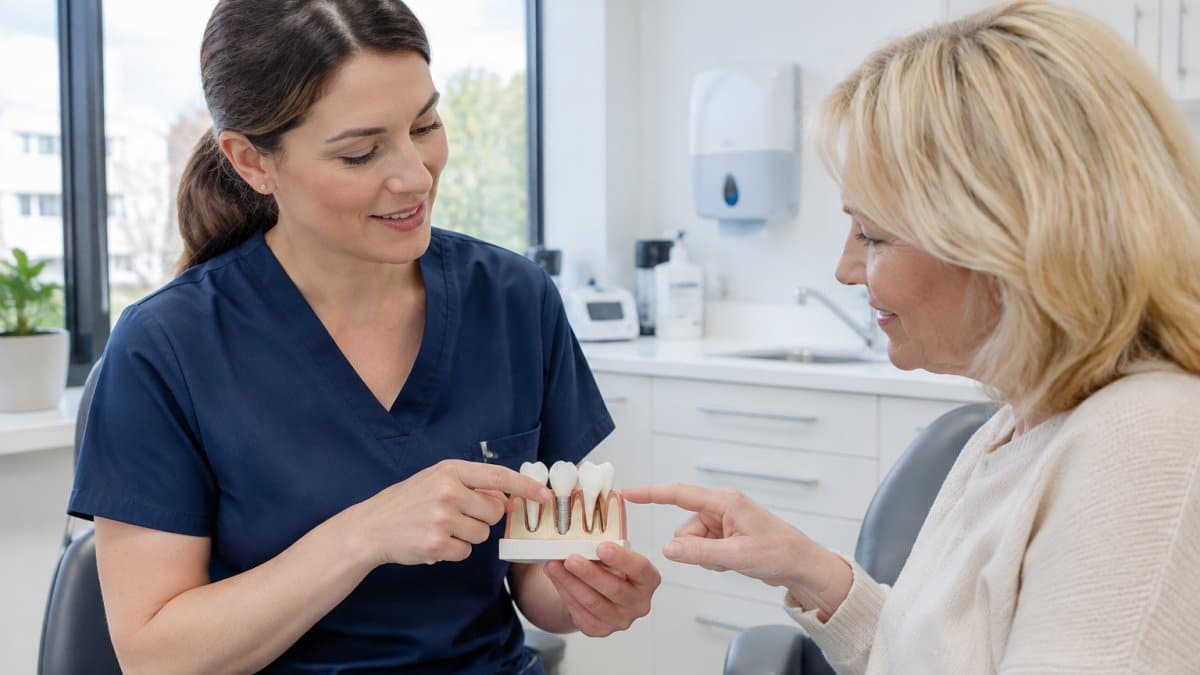
Several factors influence how long a crown lasts:
- Material: ceramic and zirconia outlast composite
- Bite and grinding: heavy chewing forces or bruxism shorten lifespan
- Oral hygiene: brushing and flossing protect against secondary decay
- Marginal leakage: a poor seal lets bacteria in and causes failure
- Regular check-ups: early detection of problems extends crown life
Signs a Dental Crown Needs Replacing
A crown needs replacing when it becomes loose, cracks, or shows signs of decay underneath. Common warning signs include pain when biting, visible gaps at the gum line, and a change in how your bite feels.
Watch out for these signs:
- The crown feels loose or rocks when you bite
- Sharp pain or sensitivity when chewing
- Visible dark lines or gaps at the crown margin
- A cracked or chipped surface
- Gum tenderness or swelling around the tooth
If you notice any of these, book a check-up promptly. Ignoring a failing crown can allow secondary decay to reach the dental pulp, which may then need root canal treatment. For more dental advice and patient stories, browse our dental blog.
Material Science and Long-Term Cost: What Most Guides Miss
Most guides compare only the upfront price. The real question is cost over the life of the tooth. A composite crown may cost less today, but if it needs replacing twice as often, the long-term spend can end up similar or higher. This section goes beyond the surface to explain why materials behave differently and how to calculate the true cost.
Why materials wear differently
Composite resin is a resin material filled with particles, and it can wear and stain over time through food and drink. Porcelain and ceramic materials are generally more resistant to staining. Zirconia is a polycrystalline ceramic that is often chosen where strength is a priority, such as on back teeth.
The way each material wears can differ, and a dentist can explain what to expect for your bite.
Total cost of ownership in GBP
Crown costs vary depending on material, the practice and your individual treatment. For current prices and an assessment of your options, please contact Smile Design Studio for a quote.
When comparing options, it can help to consider how long a crown may last and how often it might need replacing, as well as the upfront cost. Your dentist can help you weigh these factors for your situation.
A practical decision framework
Use these questions to narrow the choice before your consultation:
- Where is the tooth? Front teeth favour aesthetics; porcelain or lithium disilicate gives the best shade match and translucency. Back teeth favour strength; zirconia or a well-bonded porcelain is usually the better long-term bet.
- Do you grind or clench? If yes, composite will wear faster and may chip; a zirconia crown is more resistant to heavy occlusal forces.
- How much tooth structure remains? Composite requires less preparation, so it can be a good option when preserving natural tooth is a priority. Porcelain needs slightly more reduction but provides a stronger overall restoration.
- What is your budget and risk tolerance? If upfront cost is the main constraint, composite is accessible. If you prefer to minimise future interventions, porcelain or ceramic is usually the more economical choice over time.
- How often can you attend for maintenance? Composite benefits from regular polishing and repair; porcelain is lower maintenance but harder to repair if it does chip.
Ask your dentist about the material used and the expected lifespan of your crown before committing to treatment.
The General Dental Council’s guidance for patients explains what you can expect from your dental professional during treatment planning, including clear information about materials and costs.
Book a Crown Consultation at Smile Design Studio
Choosing between composite and porcelain crowns is a clinical decision, and the right answer depends on your tooth, your bite and your goals. A consultation with a qualified dentist can help you understand your options.
At Smile Design Studio, we take a patient-centred approach, prioritising your comfort and safety. We aim to explain your options clearly so you can make an informed choice. Whether you are anxious about treatment or simply want to understand composite vs porcelain crowns durability before deciding, you are welcome to talk your options through with the team. We also offer private dental consultations in Wakefield where you can discuss your options in a calm, modern setting.
Frequently Asked Questions
How long do porcelain crowns typically last compared to composite?
Porcelain and ceramic crowns are often reported to last many years with good care, while composite crowns are generally expected to need replacing sooner. The gap comes down to wear resistance and material strength. Porcelain holds its shape under chewing forces, whereas composite can wear down and stain over time. Your actual crown durability depends on the tooth’s position, your bite, and how well you maintain oral hygiene.
Is porcelain stronger than composite resin for dental crowns?
Porcelain and zirconia are generally considered strong materials, and composite resin is a different material with different properties. Which material suits a tooth depends on its position and your bite, and a dentist can advise you.
Which crown material is more resistant to staining and wear?
Porcelain and zirconia are generally less prone to staining than composite resin, which can absorb pigments from food and drink over time. Ceramic surfaces should be polished correctly to limit wear on opposing natural teeth.
Are composite crowns suitable for back teeth?
Composite crowns can be used on back teeth, and the suitability of each material depends on the tooth and the bite. Your dentist will assess your bite and tooth structure to advise which material may suit your needs.
What factors influence the lifespan of a dental crown?
Several factors affect crown durability: the material used, the tooth’s position and bite alignment, the amount of healthy tooth structure remaining, your oral hygiene, and habits like teeth grinding. Crowns on back teeth face more chewing forces and may wear faster. Regular check-ups and good hygiene help prevent secondary decay and marginal leakage, which are common reasons crowns fail.
If you have been putting off treatment because you are unsure which crown is right for you, we can help you decide with a proper clinical assessment. Get started with Smile Design Studio and book a consultation to discuss your crown options with a dentist who takes the time to explain every choice.

Related posts