How Much Do Private Dental Implants Cost in 2026?
How Much Do Private Dental Implants Cost in 2026?
Last Updated: November 4, 2026
Quick Summary
The cost of private dental implants is not a single figure; it is the sum of clinical work, materials, laboratory time and aftercare, and it changes from one patient to the next. An illustrative itemised breakdown for a straightforward single implant in good bone gives an indicative total of £2,275-£4,100, though figures vary by practice, clinician and case.
- Bone grafting or a sinus lift adds a surgical stage and a longer healing period before the implant is placed.
- NHS dental implants are available only in limited circumstances, and eligibility is decided by clinical need.
- Osseointegration commonly takes several months before the final restoration is fitted.
- Interest-bearing credit over 24-60 months commonly carries an APR around 9.9%-14.9%.
- Ask every practice to confirm in writing whether the quote covers the restoration, the laboratory fee, and any remedial work.
Table of Contents
- What Drives the Cost of Private Dental Implants
- An Itemised Example Quote and What It Excludes
- NHS Dental Implant Availability and What It Covers
- Dental Implant Procedure Duration and the Healing Period
- Benefits of Private Dental Implants Beyond the Price Tag
- Financing Options for Private Dental Treatment
- Comparing Quotes and Planning Your Implant Consultation
- Frequently Asked Questions
What Drives the Cost of Private Dental Implants
The cost of private dental implants in the UK is not a single figure. It is the sum of clinical work, materials, laboratory time and aftercare, and it changes from one patient to the next. A quote only makes sense once you understand what sits behind it, and it is worth asking any provider to explain each element before treatment starts.
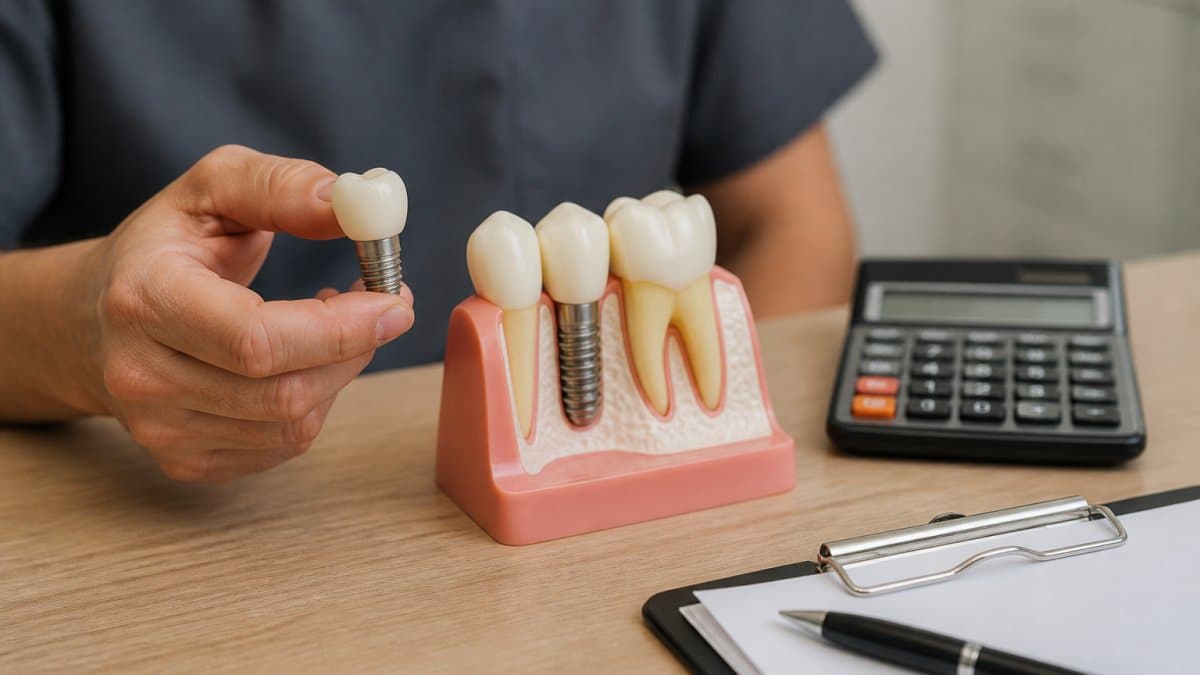
A dental implant is a titanium fixture placed into the jawbone to support a crown, bridge or denture (the NHS). The fixture is only one part of the bill. The abutment that connects it to the restoration, the crown itself, the scans and the follow-up appointments all carry their own cost.
Clinical complexity and the number of implants
The biggest single factor is how much work your mouth needs before an implant can go in. A straightforward single tooth implant in good bone is a different proposition from a case that needs a tooth extraction, a bone graft or a sinus lift first.
Bone grafting adds a surgical stage and a longer healing period before the implant is placed. A sinus lift does the same in the upper jaw. Where several teeth are missing, an implant-supported bridge or a full-arch restoration such as All-on-4 may need fewer implants than you would expect, but each one carries surgical and laboratory costs.
Materials, laboratory fees and implant systems
Implant systems vary in price, and so do the crowns and bridges attached to them. Premium implant systems and custom-made restorations cost more than standard components, and laboratory fees for a single crown differ from those for a full-arch prosthesis.
If you want context on the wider range of restorative options for adults, our guide to restorative dental care for adults sets out how implants compare with bridges and dentures.
An Itemised Example Quote and What It Excludes
Most implant quotes combine several elements into one total. Asking for them separately is the single best way to compare practices fairly. A private quote may bundle the following:
- Initial consultation and clinical assessment
- Diagnostic imaging, including a CBCT scan and 3D planning
- The implant fixture and surgical placement
- Bone graft or sinus lift, if required
- Abutment and final crown, bridge or denture
- Temporary teeth during the healing period
- Review appointments and aftercare
What frequently sits outside the headline figure matters just as much. Watch out: quotes that exclude the final crown, exclude grafting, or list the implant fixture alone as the “implant price” can change the total substantially once treatment begins.
A worked example for a single implant
To make quotes directly comparable, here is an illustrative itemised breakdown for a straightforward single implant in good bone. Figures are indicative private fees and will vary by practice, clinician and case; they are shown so you can see how a total is built rather than as a quotation.
| Line item | Indicative fee |
|---|---|
| Initial consultation and clinical assessment | £75-£150 |
| CBCT scan and 3D planning | £150-£350 |
| Implant fixture and surgical placement | £1,200-£2,000 |
| Healing abutment and review appointments | £100-£250 |
| Definitive abutment | £150-£350 |
| Custom-made crown (laboratory fee included) | £600-£1,000 |
| Indicative total | £2,275-£4,100 |
A case needing a bone graft or sinus lift adds cost and a longer healing period before the implant is placed. Where several teeth are missing, an implant-supported bridge spreads the fixture cost across fewer implants but adds laboratory and framework fees.
What the worked example reveals
When you receive a quote, ask which elements are included. A figure covering only the fixture is not comparable with one that includes the crown, and a figure that includes the crown but excludes diagnostic scans is not comparable either.
Ask every practice to confirm in writing whether the quote covers the restoration, the laboratory fee, and any remedial work. A quote you can read line by line is worth more than a lower number with vague inclusions. If you want context on the wider range of restorative options for adults, our guide to restorative dental care for adults sets out how implants compare with bridges and dentures.
NHS Dental Implant Availability and What It Covers
NHS dental implants are available only in limited circumstances, and eligibility is decided by clinical need. Check your own eligibility with an NHS dentist or your local integrated care board.
Waiting times for NHS treatment can be long, and not every practice offers implant treatment under an NHS contract. For a direct comparison of waiting times and costs between the two routes, see our full breakdown.
The NHS guidance on dental treatment and charges explains how NHS dental charges are banded and what each band covers. If you are weighing up the two routes, check your own eligibility with the practice or the local integrated care board rather than assuming implants will be funded.
Dental Implant Procedure Duration and the Healing Period
A single implant placement is generally a short procedure under local anaesthetic, while multiple implants or a full-arch case take longer. The part that shapes your timeline is the healing period, not the surgery.
After placement, the implant needs to fuse with the jawbone in a process called osseointegration. This commonly takes several months before the final restoration is fitted. During that time you may wear temporary teeth, and you will attend follow-up appointments to check healing.
Your own timeline depends on bone quality, the number of implants and whether grafting is needed. Your dental team should explain each stage so you know what to expect and when.
Benefits of Private Dental Implants Beyond the Price Tag
Private treatment can offer a treatment plan built around your case and a choice of materials and implant systems, as the verified facts describe personalised treatment plans and premium materials.
Continuity of care, with clear communication at each stage, matters for many patients, particularly nervous patients who need time and reassurance rather than a rushed appointment.
Cost is only part of the picture. If you are asking whether private dental care is worth the expense overall, our guide to whether private dental care is expensive looks at value across routine and complex treatment. For many patients, the answer comes down to how much the outcome and the experience matter to them.
Financing Options for Private Dental Treatment
Financing options for private dental treatment vary by provider, and it is worth asking what is available before you commit. Check with Smile Design Studio directly about which arrangements it offers.
Any finance agreement is a credit product, so check the terms, the total amount repayable and whether early repayment carries a charge. The Financial Conduct Authority guidance on credit agreements explains what lenders must tell you before you sign.
Comparing the main routes transparently
The table below shows how the same £3,000 single-implant treatment might be paid for under common arrangements. Figures are illustrative and are not an offer of credit; your practice will confirm the actual terms.
| Route | Deposit | Term | Representative APR | Total repayable |
|---|---|---|---|---|
| Pay in stages as treatment progresses | Typically 0%-50% at booking | Over the treatment timeline | 0% (no credit) | £3,000 |
| Interest-free credit | Often 10%-20% | 6-12 months | 0% | £3,000 |
| Interest-bearing credit | Often 10%-20% | 24-60 months | Commonly around 9.9%-14.9% | Typically £3,300-£3,900 |
A low monthly figure over a long term can cost more overall than the treatment price, so compare the total repayable before choosing. The right choice depends on your budget and how soon you want treatment to start.
What to ask before signing
- What deposit is required, and when is it taken?
- What is the representative APR, and is it fixed or variable?
- What is the total amount repayable, not just the monthly payment?
- Are there early repayment charges or arrangement fees?
- What happens to the finance if treatment is delayed or a stage is not needed?
Ask for the full cost of the plan in writing before you commit, and compare it with the pay-in-stages option. If you are weighing up whether private care is worth the expense overall, our guide to whether private dental care is expensive looks at value across routine and complex treatment.
Comparing Quotes and Planning Your Implant Consultation
Comparing quotes properly means comparing treatment plans, not just totals. Two practices can quote similar figures for very different scopes of work, so line up the inclusions side by side before deciding.
Use this checklist when you review each quote:
- Is the final crown, bridge or denture included, or priced separately?
- Are diagnostic scans and 3D planning included?
- Is grafting or a sinus lift included, or listed as an extra?
- Which implant system and materials are specified?
- Are temporary teeth and review appointments covered?
- What happens if the implant fails, and is remedial work included?
- Is finance available, and what is the total repayable?
When you are ready to discuss your own case, you can book appointment with our team.

Frequently Asked Questions
Are dental implants available on the NHS?
Implants can be provided on the NHS, but availability is limited. NHS dental implant availability depends on clinical need. Ask your dentist for an NHS assessment, and check current NHS dental charges on the official NHS website before assuming you qualify.
What factors influence the total cost of dental implants?
The main factors are the number of implants, whether you need a bone graft or sinus lift, the implant system and crown materials used, laboratory fees, and the complexity of your case. Diagnostic imaging such as a CBCT scan, extractions, and temporary teeth add to the total. A single tooth implant costs less overall than a full-arch restoration. Because private dental implants are quoted individually, ask for an itemised treatment plan so you can see exactly what each element contributes.
Does dental insurance cover the cost of implants?
Most standard dental insurance plans do not cover implants in full, and many exclude them as cosmetic. Some policies contribute towards the crown or towards extractions and diagnostic imaging, and a few higher-tier plans include implant cover after a qualifying period. Check your policy wording for exclusions and annual limits before committing. If you are considering financing options for private dental treatment, compare the total repayable against any insurer contribution rather than the monthly figure alone.
How long do private dental implants typically last?
Implant fixtures can last many years, and some last decades, but longevity depends on bone quality, oral hygiene, smoking status and regular aftercare. The crown or bridge on top usually needs replacing sooner than the implant itself, which is a long-term cost worth budgeting for. Attend follow-up appointments and maintenance visits, and clean around the implant carefully. Your dentist should explain realistic expectations for your case at consultation rather than promising a fixed lifespan.
The right way to understand what private dental implants will cost you is to have your own case assessed, because no article can price your bone, your gums or your goals. At Smile Design Studio, we offer a patient-centred consultation, advanced diagnostic imaging and a written treatment plan with clear inclusions, so you can decide with confidence rather than guesswork. Get started with Smile Design Studio and book an assessment to find out what your treatment would involve.

Related posts