How to Fix a Chipped Tooth Permanently: A Complete Guide
How to Fix a Chipped Tooth Permanently: A Complete Guide
Table of Contents
- Immediate Steps After Chipping a Tooth
- Chipped Tooth Pain and Sensitivity: What It Means
- Chipped Tooth Repair Options: A Decision Framework
- How Dentists Fix a Chipped Tooth: Step by Step
- Chipped Tooth Repair Cost and What Affects It
- What “Permanent” Really Means for Each Repair
- Why DIY Repair Is Risky: What to Avoid
- Aftercare and Preventing Repeat Chipping
- Frequently Asked Questions
Last Updated: October 12, 2026
Immediate Steps After Chipping a Tooth
A chipped tooth is a break in the hard outer layer of the tooth, and how you respond in the first hour shapes every repair option that follows.
First, stay calm and check for bleeding. Rinse gently with warm water, and press clean gauze on any bleeding for a few minutes.
Then take these steps:
- Save any broken pieces in a little milk or saliva
- Cover a sharp edge with dental wax or sugar-free gum
- Avoid very hot, cold, or sugary food and drink
Do not ignore a chip because it feels small. A fractured tooth can expose softer dentin, which wears away faster than enamel.
Chipped Tooth Pain and Sensitivity: What It Means
Pain and sensitivity after a chip are signals, not annoyances: they tell you how deep the damage goes. Mild twinges with cold drinks usually mean enamel or dentin is exposed; sharp, lasting pain points to the pulp.
Watch for these signs:
- A quick flash of pain with hot or cold drinks
- Ongoing ache without any trigger
- Pain when biting down
If you have constant pain, swelling, or a loose tooth, seek urgent dental care, that combination can point to a fracture reaching the pulp or root.
Chipped Tooth Repair Options: A Decision Framework
The right chipped tooth repair depends on three things: chip size, tooth location, and your symptoms. The symptom picture matters as much as visible size, a small break exposing the pulp is more urgent than a larger enamel-only fracture.
Start with triage: how urgent is it?
Before choosing a treatment, work out how quickly you need to be seen, then confirm with a dentist.
| What you notice | Likely cause | Urgency |
|---|---|---|
| Rough or sharp edge, no pain | Enamel-only chip | Routine appointment within days |
| Short twinge with cold drinks | Dentin exposed | Routine appointment, sooner if worsening |
| Lingering ache, pain on biting | Deep fracture near the pulp | Same-day or next-day call to your dentist |
| Visible pink or red inside the break | Pulp exposed | Urgent, same-day care |
| Swelling, fever, loose tooth, bleeding that will not stop | Pulp or root involvement, possible infection | Urgent, same-day care, or call 111 if your practice is closed |
If you have facial swelling, difficulty swallowing or breathing, or a fever alongside a broken tooth, treat it as a dental emergency. In the UK, NHS 111 can direct you to urgent dental care when your practice is shut (the NHS).
Then match the repair to the chip
| Chip size and location | Likely repair | Appointments | Typical durability |
|---|---|---|---|
| Tiny chip, back tooth | Tooth smoothing and polish | One | Long-lasting |
| Small chip, front tooth | Composite bonding | One | Several years |
| Medium chip, front tooth | Dental veneer | Two or three | Many years |
| Large fracture, any tooth | Dental crown | Two | Many years |
| Chip reaching the pulp | Root canal therapy plus crown | Two or more | Many years |
| Tooth lost below the gum | Dental implant | Several | Long-term |
Take a clear photo of the chip on your phone before your appointment. It helps your dentist plan the repair and shows the tooth’s original shape, which matters most for front teeth.
Bonding and Tooth-Coloured Fillings
Composite bonding is the most common fix for small to medium chips. Your dentist builds up the tooth with tooth-coloured filling material, layer by layer, then shapes and polishes it to blend with your natural enamel.
Bonding usually takes one visit with little or no drilling. The trade-off is durability: composite resin can stain and chip over time, especially on front teeth.
For very small chips, a tooth-coloured filling may be all you need to restore missing structure and smooth the edge.
Veneers and Crowns
A dental veneer is a thin shell bonded to the front of a tooth, suited to visible front-tooth damage where bonding would not hold or would look uneven.
A dental crown caps the entire tooth, chosen for larger fractures or after root canal therapy when the tooth needs full protection.
Both options last many years with good care. Neither is a quick fix, and both involve some removal of tooth structure.
Root Canal Therapy and Implants
When a fracture reaches the tooth pulp, a surface repair will not work. Root canal therapy removes the damaged pulp, cleans and seals the inside of the tooth, and a crown usually follows to protect what remains.
If the tooth is broken below the gum line and cannot be saved, a dental implant may be the best path: it replaces the root with a crown on top, restoring function and appearance over several appointments.
Planning the practical side: visits and costs
Before you commit, ask your dentist three questions: the total cost, how many appointments are involved, and what happens if the repair fails later.
- Appointments. Bonding and fillings are usually a single visit. Veneers and crowns typically need two or three. Root canal therapy plus a crown often needs two or more. Implants involve several visits spread over months.
- Costs. Private fees vary by practice and region, so ask for a written treatment plan. Bonding is the least expensive restorative option, veneers and crowns sit in the middle, and implants are the most costly.
- NHS care. NHS dental charges are banded, and some restorative work falls into a higher band than a routine check-up. For current banding and charges, see the NHS dental treatment charges page.
Urgency is decided by symptoms, not by how big the chip looks. A small break with lingering pain needs attention faster than a larger painless enamel chip.
How Dentists Fix a Chipped Tooth: Step by Step
A repair follows a clear sequence, and knowing it helps you feel in control.
- Examination and X-ray. Your dentist checks the chip and takes images to see the full extent of the damage.
- Numbing. Local anaesthetic keeps you comfortable if drilling or shaping is needed.
- Cleaning and preparing. The area is cleaned, and any rough edges are smoothed.
- Building the repair. Composite is applied and shaped, or the tooth is prepared for a veneer or crown.
- Bonding and setting. The material is hardened with a special light or fixed with dental cement.
- Polishing and checking your bite. Your dentist shapes the repair and makes sure your teeth meet comfortably.
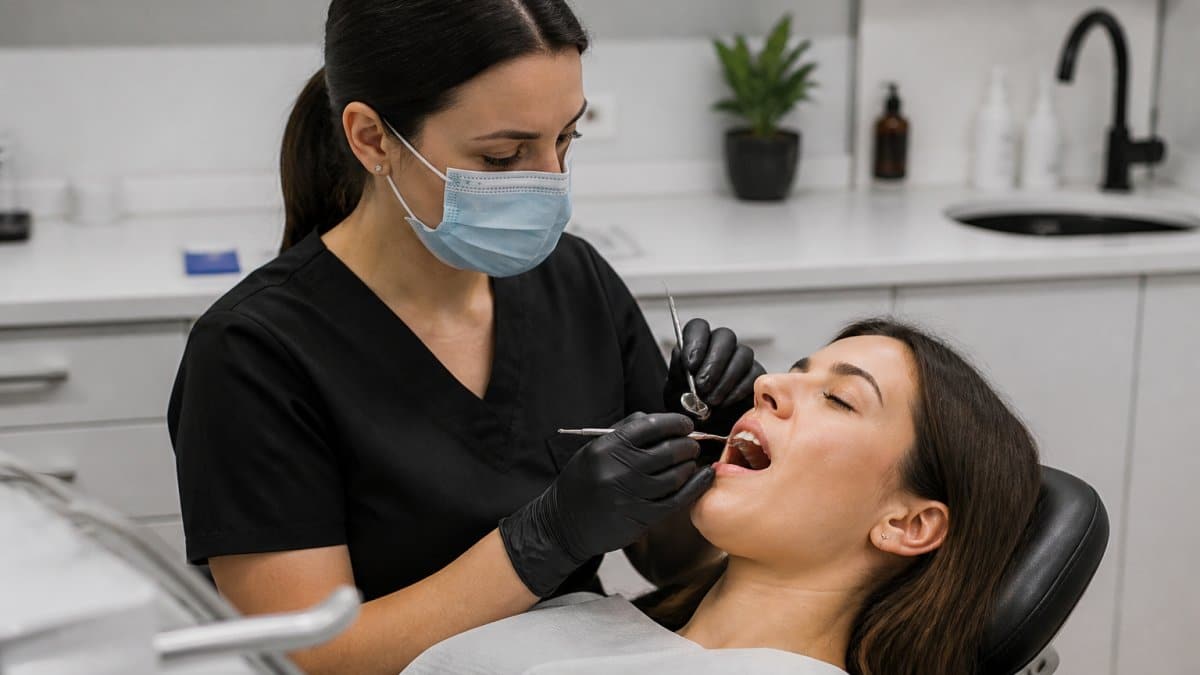
Expected result: a smooth, natural-looking tooth you can bite and smile with again. For a simple bonding repair, the whole visit often takes a short amount of time.
Chipped Tooth Repair Cost and What Affects It
Chipped tooth repair cost varies widely, and no honest dentist will quote a firm figure before seeing the tooth. Pricing depends on the repair type, the tooth’s location, and how much work is needed.
The main factors are:
- The repair type: bonding costs less than a veneer or crown
- Whether the pulp is involved, which adds root canal therapy
- The number of appointments required
Private dental care is not covered by the NHS in the same way as routine treatment, so it is worth asking for a written treatment plan with costs before you commit. For guidance on NHS dental charges, see the NHS dental treatment charges page.
Ask two questions at your consultation: what is the total cost, and what happens if the repair needs replacing later?
What “Permanent” Really Means for Each Repair
No repair lasts forever. “Permanent” in dentistry means a restoration designed to last years, not a lifetime. What separates a repair that lasts a decade from one that fails in two years is usually maintenance, not luck.
Durability and maintenance by repair type
| Repair | Typical lifespan | What shortens it | How to extend it |
|---|---|---|---|
| Composite bonding | Several years | Staining, biting hard objects, grinding | Avoid staining drinks, wear a night guard if you grind |
| Tooth-coloured filling | Several years | Heavy bite forces, clenching | Regular check-ups, treat sensitivity early |
| Veneer | Many years | Trauma, gum recession at the margin | Good oral hygiene, mouthguard for sport |
| Crown | Many years | Root problems under the crown, gum disease | Keep the margin clean, attend check-ups |
| Root canal plus crown | Many years | Untreated decay, fracture of the root | Do not delay the crown after root canal therapy |
| Implant | Long-term | Smoking, poor hygiene, gum disease | Daily cleaning around the implant, routine reviews |
What actually makes a repair last
Three factors decide whether a repair lasts:
- The foundation. A restoration is only as good as the tooth underneath. Untreated decay or cracks will make it fail, however well it is made.
- Your bite. Grinding, clenching, and a heavy bite load concentrate force on restorations. A night guard is one of the cheapest ways to protect both natural teeth and repairs.
- Your habits. Chewing ice, opening packaging with your teeth, and frequent acidic drinks all shorten the life of any repair.
Warning signs a repair needs attention
Book a review if you notice any of these:
- A rough or sharp edge returning on a bonded tooth
- A visible line or gap at the edge of a veneer or crown
- New sensitivity to hot or cold under a restoration
Catching these early usually means a simple repair or re-bond; leaving them can make the tooth underneath fail, turning a small fix into a root canal or extraction.
What to do if a repair chips or loosens
If a restoration fails, treat it like a fresh chip: save any fragments, avoid chewing on that side, and call your dentist promptly. Do not re-glue a crown or veneer at home, bring the piece with you, as a dentist can sometimes re-cement it, which is quicker and cheaper than making a new one.
A repair that has come loose is a route for bacteria to get under it. Even if it feels comfortable, do not leave it for weeks.
The honest takeaway
Think of a chipped tooth repair as protecting the tooth long term, with occasional maintenance, rather than a once-and-done fix. Keeping up with check-ups, managing grinding, and acting early when something feels different can help extend the life of bonding, veneers, and crowns.
Why DIY Repair Is Risky: What to Avoid
DIY tooth repair kits and online “fix it yourself” guides are a genuine risk, not a shortcut. Bonding or filling your own tooth can trap bacteria, damage the pulp, and turn a small chip into a much bigger problem.
Avoid these:
- Superglue or household adhesives, which are toxic and can burn the gum
- Filing or sanding a sharp edge yourself, which removes enamel you cannot replace
- Over-the-counter temporary filling material left in place for weeks
A temporary filling material can protect a tooth for a day or two until you see a dentist. It is not a permanent restoration, and it should never replace a proper repair.
Aftercare and Preventing Repeat Chipping
Good aftercare protects your repair and lowers the odds of another chip. Most repeat damage comes from the same habits that caused the first one.
Follow these steps:
- Avoid chewing ice, hard sweets, and unpopped popcorn
- Do not use your teeth to open packaging
- Wear a mouthguard if you grind your teeth or play contact sports
If you clench or grind at night, ask your dentist about a night guard, one of the simplest ways to protect both your natural teeth and any restoration.
Frequently Asked Questions
Can I repair a broken tooth at home?
You can manage symptoms at home, but you cannot permanently repair a broken tooth without a dentist. Rinse your mouth with warm salt water, apply a cold compress to reduce swelling, and use sugar-free chewing gum or dental wax to cover any sharp edges. Avoid superglue or household adhesives, as these are unsafe and can damage the tooth further. Book a dental appointment as soon as possible for a proper assessment.
Can a chipped tooth be fixed permanently?
Yes, most chipped teeth can be repaired with a durable restoration. Composite bonding, veneers, and crowns can last for many years with good care. The word permanent means the repair is long-lasting, not indestructible. Regular check-ups, avoiding hard foods, and wearing a mouthguard if you grind your teeth will help your repair last as long as possible.
How much does it cost to fix a chipped tooth in the UK?
Costs vary widely depending on the repair type and whether you see an NHS or private dentist. NHS charges for a single course of treatment are banded. Private composite bonding, veneers, and crowns vary in cost. Your dentist will provide a written treatment plan with exact costs before starting.
What can I do if a broken tooth is cutting my tongue?
Cover the sharp edge with sugar-free chewing gum or dental wax to protect your tongue and inner cheek. Rinse with warm salt water to keep the area clean. Avoid touching the edge with your tongue where possible. If the bleeding is heavy or does not stop after 10 minutes of pressure, go to an urgent care or emergency dental service. Otherwise, book the earliest available appointment with your dentist.
A chipped tooth can feel alarming, but the path to a lasting repair is straightforward when you act quickly and get the right advice. At Smile Design Studio, we offer personalised treatment plans, a calm and welcoming environment for nervous patients, and clear communication so you can make confident choices about your care. Book an appointment with Smile Design Studio and get a repair plan built around your tooth, your comfort, and your long-term smile.
Related posts