How to Make Composite Veneers Last With Proper Care

How to Make Composite Veneers Last With Proper Care
Last Updated: November 9, 2026
Quick Summary
Composite veneers typically last five to seven years with proper care, though some last longer and others fall short of that range. Daily gentle brushing with non-abrasive toothpaste, regular check-ups and a night guard if you grind all help you reach the upper end of that range.
- Heavy bite contact, grinding, nail-biting and ice-chewing all shorten veneer life.
- Brush two minutes with a soft brush and non-abrasive fluoride toothpaste, avoiding whitening or charcoal pastes.
- Floss or use interdental brushes once a day before brushing to protect gums around each veneer.
- Book a professional cleaning and check-up about every six months unless your dentist advises otherwise.
- By five years, expect slight dulling, small edge wear or staining that may need polishing rather than replacement.
Table of Contents
- The Realistic Composite Veneer Lifespan and What Shapes It
- Factors That Affect How Long Composite Veneers Last
- How to Care for Composite Veneers Day to Day
- Composite Veneers After 5 Years: What to Expect
- Composite vs Porcelain Veneers Lifespan Compared
- When a Veneer Chips, Stains or Comes Loose: Repair or Replace
- Booking Your Veneer Check-Up and Care Plan
- Frequently Asked Questions
The Realistic Composite Veneer Lifespan and What Shapes It
Composite veneers typically last five to seven years with proper care, though some last longer and others fall short of that range. That estimate comes from general clinical experience, not a fixed guarantee. Composite veneers are thin layers of tooth-coloured resin bonded to the front of your teeth, and how long they last depends heavily on how you look after them and how your teeth meet when you bite. Below, we break down the factors that move that number up or down, and the daily habits that protect your investment.
Why Estimates Vary So Widely
Most guides quote a single figure and move on. The real answer is a range, because several things pull in different directions at once.
- Your bite: heavy contact on a front tooth wears resin faster
- Your habits: grinding, nail-biting and ice-chewing shorten life
- Your dentist’s technique: good bonding and shaping matter enormously
- Your home care: daily brushing and regular check-ups protect the edges
The honest position is that a lifespan estimate is a guide, not a promise. A careful patient with a gentle bite may get well beyond seven years. Someone who grinds at night may see wear much sooner.
Factors That Affect How Long Composite Veneers Last
The biggest influences on composite veneer lifespan are bite forces, grinding habits, the specific tooth involved, and how much tooth the veneer covers. Each plays a part, and they interact.
Bite Forces, Grinding and Wear Patterns
Your front teeth are built for cutting, not crushing. When they take on more force than intended, the resin wears at the edges and can chip.
Teeth grinding, also called bruxism, is a common culprit (Clenching and grinding your teeth (bruxism)). Many people grind at night without knowing it. A night guard, made by your dentist, absorbs that force and protects the veneer surface.
Wear patterns also show up unevenly. One tooth that sits slightly proud of the others takes more contact and wears first.
How Lifespan Varies by Tooth and Treatment Extent
Not every veneer faces the same demands. A single veneer on a side tooth usually lasts longer than a set across the front, simply because of where the forces land.
Treatment extent matters too. A thin edge repair is more fragile than a full veneer covering the whole front surface. Larger restorations carry more risk of chipping at the margins.
Your natural tooth underneath also counts. If the tooth is heavily worn or previously repaired, the veneer has less solid ground to bond to.
How to Care for Composite Veneers Day to Day
Good daily care is the single most reliable way to extend how long composite veneers last. The routine is simple, but consistency is what counts. Patients who follow a structured routine are generally better placed to reach the upper end of the five-to-seven-year range.
Your Morning Routine
- Brush for two minutes with a soft-bristled toothbrush and a non-abrasive fluoride toothpaste. Avoid whitening or charcoal pastes, which are more abrasive and can dull the resin surface.
- Use a gentle circular motion at the gum line rather than scrubbing back and forth. Resin is softer than enamel, so hard brushing wears it faster.
- Rinse with water after breakfast rather than brushing immediately if you have had acidic food or drink. Acid softens the surface temporarily, and brushing straight away can abrade it.
- If you wear a night guard, rinse it in cool water and let it air-dry before storing it in its case.
Your Evening Routine
- Floss or use interdental brushes once a day before brushing. This protects the gum health around each veneer, and healthy gums support the bonding margin.
- Brush again for two minutes with the same soft brush and non-abrasive paste.
- Rinse with water after coffee, red wine, tea or fizzy drinks during the day, and especially before bed. Resin has a slightly porous surface compared with porcelain, so it can pick up stains over time.
- Check your veneers visually once a week for edge wear, small chips or staining near the margins. Catching these early usually means a simple polish rather than a repair.
Your Check-Up Routine
- Book a professional cleaning and check-up at the interval your dentist advises, usually every six months unless they recommend otherwise.
- A professional polish can lift surface staining and smooth minor roughness that traps plaque.
- Mention any new grinding, jaw tightness or sensitivity. These are early signs that a night guard or a bite review may be needed.
- Review your night guard at each visit for wear or fit changes.
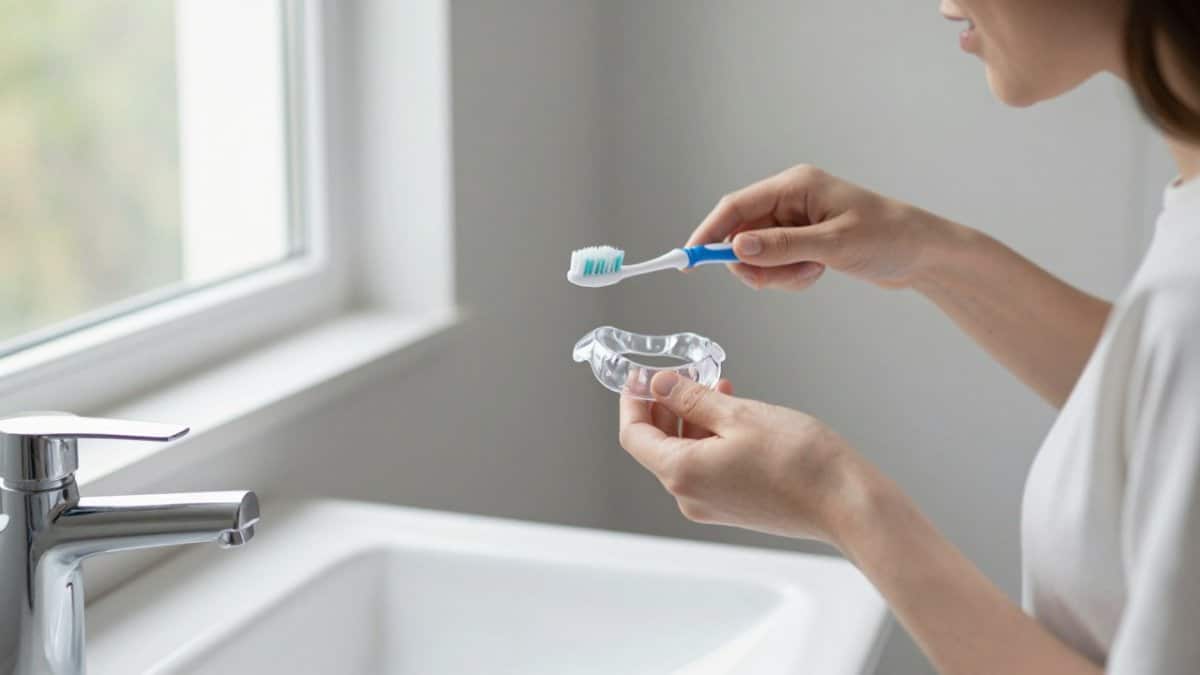
Watch out: scrubbing hard with a stiff brush or abrasive toothpaste wears the resin surface and dulls the finish faster. Gentle and regular beats hard and occasional. If you want the professional clean that keeps veneers looking fresh, you can book a scale and polish with our team.
Composite Veneers After 5 Years: What to Expect
By the five-year mark, most composite veneers show some signs of age, and that is normal. The changes are usually gradual rather than sudden.
You may notice slight dulling of the surface, small edge wear, or a touch of staining near the margins. At this stage, some veneers may be polished or touched up rather than replaced, and a dentist can check the bonding line and gum health.
Some patients sail past five years with minimal change. Others need a repair or two. Both outcomes sit within the expected range.
Composite vs Porcelain Veneers Lifespan Compared
Porcelain veneers generally last longer than composite, while composite is typically expected to last around five to seven years. Porcelain resists staining better and holds its shine longer.
| Feature | Composite Veneers | Porcelain Veneers |
|---|---|---|
| Typical lifespan | 5-7 years | 10-15 years |
| Stain resistance | Moderate | High |
| Repair ease | Simple to add resin | Harder, may need replacement |
| Upfront cost | Lower | Higher |
| Tooth preparation | Minimal | More tooth removed |
The trade-off is real. Composite asks more of you in maintenance but is kinder to the tooth and easier to fix. Porcelain lasts longer but costs more and is less forgiving to repair. For a fuller side-by-side, see our guide on choosing between composite and porcelain veneers.
When a Veneer Chips, Stains or Comes Loose: Repair or Replace
A chip, a stubborn stain or a loose veneer does not always mean replacement. Some problems can be repaired with fresh resin bonded over the damaged area. The key is to match the response to the problem, because some issues need prompt attention while others can wait for a routine visit.
Small Chip or Edge Wear
A small chip at the edge is usually repairable with added resin. A dentist may be able to smooth the area, rebuild the missing section and polish it to blend with the rest of the veneer.
- What to do: keep the area clean and avoid biting on that tooth until you are seen.
- What to avoid: filing or smoothing the chip yourself, which can make the repair harder.
- Urgency: book a routine appointment; this is rarely an emergency unless the chip is sharp and irritating your tongue or lip.
Surface Stain
Surface staining is often lifted with a polish at your check-up. Resin picks up colour from coffee, tea, red wine and tobacco more readily than porcelain, so a professional polish every six months keeps it looking fresh.
- What to do: continue gentle brushing and rinsing after staining drinks.
- What to avoid: abrasive whitening toothpastes and home whitening kits, which can dull the resin and may not lift stains evenly.
- Urgency: routine visit.
Loose or Debonded Veneer
Debonding, where the veneer lifts from the tooth, needs prompt attention so decay cannot set in underneath. Food and bacteria can trap under a loose edge, and the tooth underneath is unprotected.
- What to do: keep the area clean, avoid biting on it, and contact your dentist promptly.
- What to avoid: pressing the veneer back down with household glue or attempting to re-bond it yourself.
- Urgency: see your dentist quickly, ideally within a few days.
Crack Through the Veneer
A crack that runs through the veneer is different from a chip. It can compromise the seal and may worsen under bite force. Replacement may be the safer choice, though your dentist will assess whether the crack is superficial or structural.
- What to do: avoid biting on the tooth and book an appointment.
- What to avoid: ignoring a crack that catches your fingernail or is sensitive to temperature.
- Urgency: prompt appointment.
How Dentists Decide Between Repair and Replacement
A dentist will typically weigh the size and position of the damage, the condition of the bonding margin, the health of the tooth underneath and the age of the veneer when deciding between repair and replacement.
If a veneer has stained and you want to understand your options first, our step-by-step guide on fixing stained dental veneers walks through what can be done. For a chipped tooth more broadly, this guide to fixing a chipped tooth permanently covers the full picture.
Booking Your Veneer Check-Up and Care Plan
Regular check-ups are what turn a five-year veneer into a seven-year one. Your dentist can spot early wear, polish the surface and catch a loose edge before it becomes a bigger repair.
At Smile Design Studio, we build a personalised care plan around your veneers, with clear guidance on cleaning, night guards and review intervals. If cost is a concern, our dental payment plans can help spread the cost of ongoing care.
Protecting your veneers comes down to small, steady habits and regular professional checks. If you are unsure whether your veneers need a polish, a repair or a review, our team can assess them and explain your options clearly.
Frequently Asked Questions
How long do composite veneers typically last?
Composite veneers are generally expected to last for several years with proper care, and some last longer. The composite resin is thinner and softer than porcelain, so it wears faster under bite forces and daily habits. How long yours last depends on your oral hygiene, whether you grind your teeth, what you eat and drink, and how often you have them checked by a dentist. Regular check-ups let small chips and worn edges be polished or repaired before they turn into bigger problems.
Can composite veneers last 10 years?
Some do, but 10 years sits at the upper end of the realistic composite veneer lifespan. Reaching it usually means consistent daily cleaning, avoiding hard foods and nail-biting, wearing a night guard if you grind, and attending regular dental check-ups for professional cleaning and polish. Touch-ups along the way are normal and extend the life of the veneers. If you want the longest possible lifespan, porcelain veneers generally last longer.
Do composite veneers stain or lose their polish over time?
Yes, composite resin can pick up stains and its surface polish dulls gradually. Coffee, red wine, tea and smoking are the usual culprits, and the edges of the veneers often show it first. A professional polish at a routine appointment removes surface staining and restores shine. Between visits, rinse with water after stain-causing drinks and brush twice daily. If staining sits deeper in the resin, your dentist may be able to refinish the surface rather than replace the veneer.
Can composite veneers be repaired if they chip?
Chipping is one of the most common reasons composite veneers are repaired rather than replaced. Because the material is built up and bonded in layers, a dentist may be able to add new composite to a chipped edge and polish it to match. If a veneer has debonded or cracked through, replacement may be the better option. Book an appointment promptly so the exposed tooth is protected.

Related posts