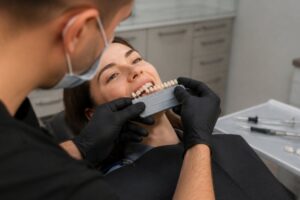
How to Fix Stained Dental Veneers: A Step-by-Step Guide
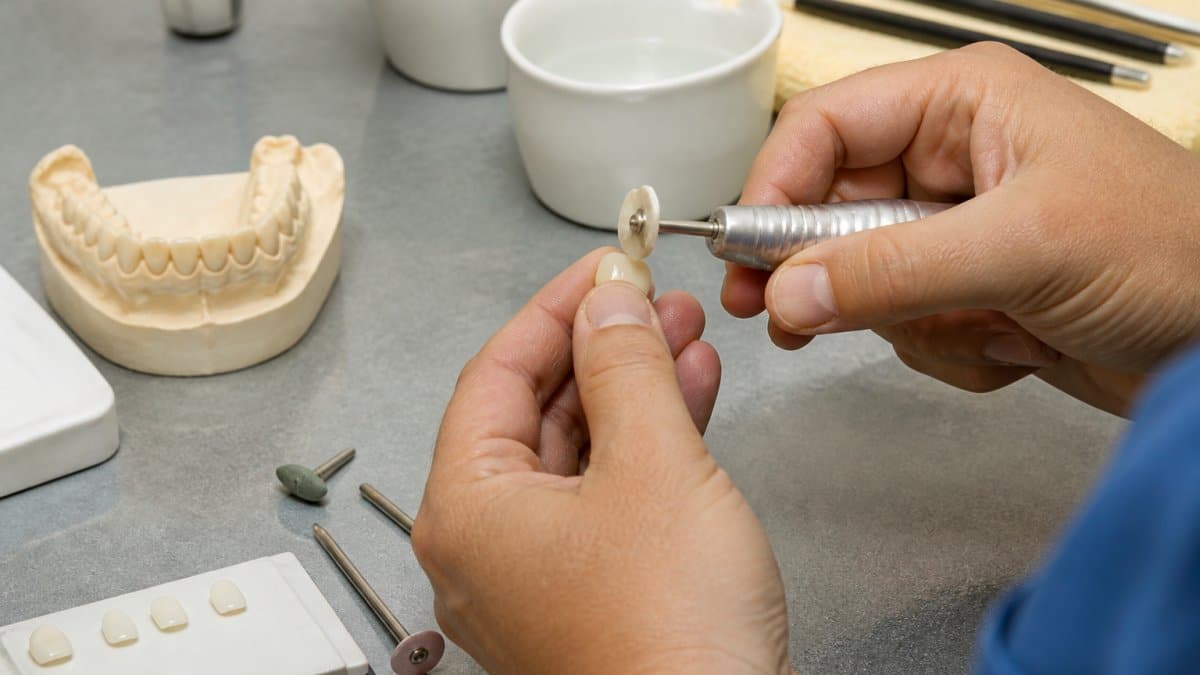
How to Fix Stained Dental Veneers: A Step-by-Step Guide
Table of Contents
- Identifying the Source of Veneer Discoloration
- How to Clean Porcelain Veneers Safely at Home
- Understanding Dark Lines Around Veneer Edges
- Can You Whiten Veneers? What Actually Works
- Professional Stained Veneers Treatment Options
- Prevention: Protecting Your Veneers Long-Term
- When to Book a Dental Appointment
- Frequently Asked Questions
Last Updated: October 7, 2026
Identifying the Source of Veneer Discoloration
Stained veneers are frustrating, but understanding how to fix stained dental veneers depends entirely on what’s causing the discoloration. The problem could be surface stains, deeper issues with the veneer material itself, or staining around the edges where the veneer meets your natural tooth. Understanding the source is the first step toward the right solution.
Surface stains versus deeper discoloration matter because they require completely different approaches. Surface stains sit on top of your porcelain veneers and often come from everyday habits: coffee, tea, red wine, or tobacco. These are usually the easiest to address. Deeper discoloration, by contrast, happens inside the veneer material or at the bonding cement beneath. This type won’t respond to whitening products or aggressive scrubbing, it typically requires professional intervention.
Understanding the difference between surface stains and deeper discoloration changes everything about treatment.
Common causes fall into a few clear categories:
- Dietary habits: Dark beverages and staining foods accumulate on veneers over time
- Tobacco use: Tar and nicotine create stubborn, yellowing stains
- Age and wear: Veneers can become porous over years, trapping discoloration
- Poor oral hygiene: Plaque buildup around veneer edges leads to visible staining
- Bonding cement staining: The material holding your veneer to your tooth can darken, especially around edges
The key insight most people miss: staining at the veneer edges is often the real culprit. This happens where the porcelain meets your natural tooth structure. The bonding cement can absorb stains, or bacteria and plaque can accumulate in the microscopic gap. This type of staining is visible but tricky to address at home.
If your veneers look darker around the edges than across the surface, the problem is likely at the bonding line, not the veneer itself. This usually requires professional cleaning or polishing.
How to Clean Porcelain Veneers Safely at Home
Daily care prevents staining and keeps veneers looking bright, but the margin between effective cleaning and damage is narrower than most patients realise. Porcelain is hard, yet its surface glaze is what repels pigment, once that glaze is scratched, stains take hold more easily and become harder to lift. The goal at home is to remove plaque and fresh surface staining without abrading the glaze or stressing the bond.
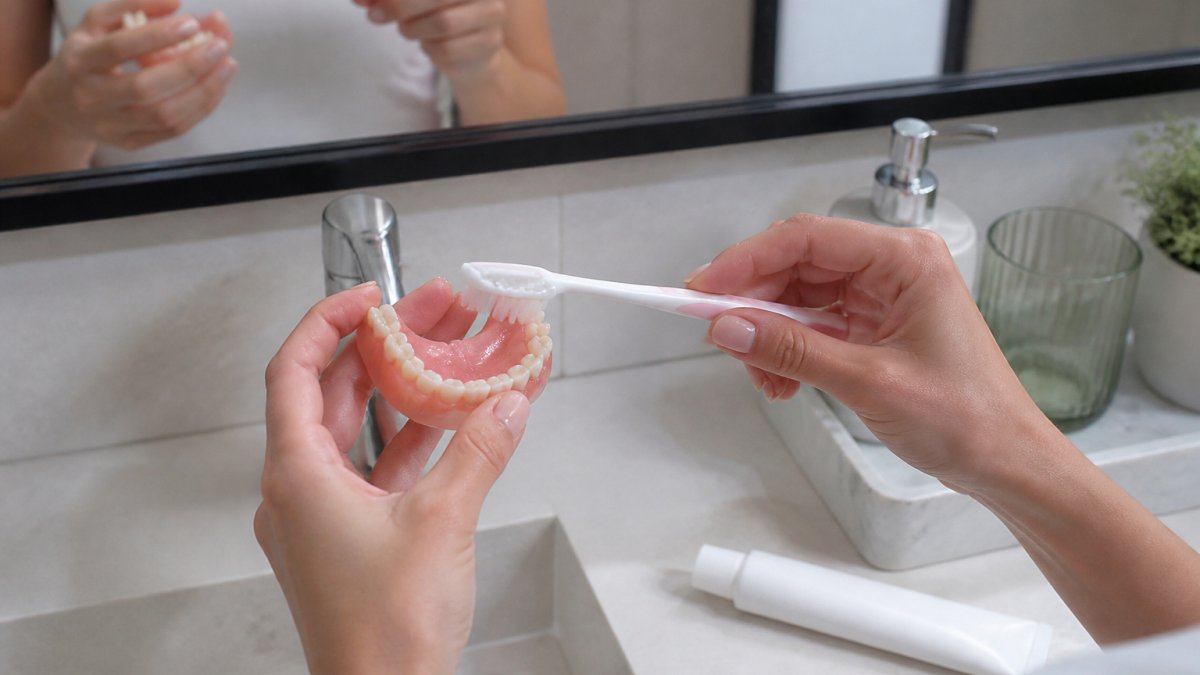
Brushing technique. Use a soft-bristled toothbrush and brush in small circular motions at roughly 45 degrees to the gum line, spending extra time where the veneer meets the tooth. Medium and hard bristles, and pressing hard with any brush, wear the glaze over time.
Flossing. Floss once daily, guiding the floss gently between the teeth and curving it around each tooth rather than snapping it down onto the gum. Snapping stresses the margin and, over time, can contribute to the very leakage that lets staining develop at the edges. If you use interdental brushes, choose the size that passes without force.
Toothpaste. Choose a non-abrasive, low-RDA fluoride toothpaste. Whitening toothpastes rely on polishing agents and, in some cases, peroxides that do nothing for porcelain while adding wear. A fluoride paste supports the natural tooth structure around and beneath the veneer, which is where decay can still occur even though the veneer itself cannot.
What to avoid. This is where most at-home damage happens:
- Baking soda and charcoal toothpastes, abrasive enough to scratch the glaze and create grooves where pigment settles
- Whitening strips and gels, no effect on porcelain or composite, and some formulations can irritate gums and margins
- Acidic rinses and undiluted mouthwash, repeated acid exposure softens the surface and dulls the finish
- DIY pastes (bicarbonate, lemon, salt), abrasive, acidic, or both
- Hard or metal instruments for scraping, leave scratches that trap stain
Rinsing. After coffee, tea, red wine or anything acidic, rinse with plain water. This dilutes the pigment and acid before they can settle. Waiting around thirty minutes before brushing after something acidic is a sensible habit, since brushing softened surfaces is more abrasive.
Safe at-home actions versus treatments to avoid come down to one principle: you can remove fresh plaque and surface film, but you cannot bleach or resurface a veneer at home. If a product promises to whiten veneers, it is either abrasive, ineffective, or both.
Never use baking soda or charcoal toothpaste on veneers. These are abrasive enough to scratch the surface, creating tiny grooves where stains settle in more easily. The same applies to whitening strips and DIY pastes, they cannot lighten porcelain and risk damaging the finish.
Understanding Dark Lines Around Veneer Edges
Dark lines or shadows along the veneer edge are one of the most common complaints. This isn’t always a stain, sometimes it’s how the veneer is constructed or positioned.
The edge of a veneer sits just below your gum line. This area collects plaque and bacteria naturally. Over time, staining can occur in two places: on the veneer itself near the edge, or in the bonding cement underneath. The bonding cement is often darker than the veneer material, so when it becomes visible or stained, it creates that dark line appearance.
Professional cleaning and polishing can remove surface stains here, but if the line persists, it may indicate that the veneer edge needs repositioning or the veneer needs replacement. This is where a dental check-up becomes essential.
Can You Whiten Veneers? What Actually Works
This is the question every veneer patient asks: can you whiten veneers? The short answer is no, whitening products don’t work on porcelain or composite veneers.
Whitening gels and strips work by bleaching the enamel and dentin of your natural tooth. Veneers have no enamel or dentin to bleach. They’re made of porcelain or composite resin, which don’t respond to whitening chemicals. Using whitening products on veneers is pointless and can damage them.
What you can do is clean surface stains with professional polishing. This removes discoloration but doesn’t change the veneer’s base colour. If your veneers are genuinely discoloured, whitening isn’t the solution, replacement is. (Source: guidance on the safe use of dental products)
Why this matters: Many patients waste money on whitening kits hoping to brighten stained veneers. It doesn’t work. Professional cleaning removes surface stains; replacement is the only way to change the veneer’s colour itself.
Whitening products cannot lighten veneer colour. If surface cleaning doesn’t restore brightness, the veneer material itself has absorbed staining and needs professional polishing or replacement.
Professional Stained Veneers Treatment Options
When home care isn’t enough, learning how to fix stained dental veneers professionally depends on where the discoloration actually sits. A useful way to think about it is a simple decision tree: surface staining responds to cleaning, staining at the margin often responds to rebonding, and discoloration within the veneer material itself usually means replacement. Identifying the layer first can help prevent patients from pursuing the wrong fix.
Professional cleaning and polishing is the first step for surface staining. Your dentist uses a prophylaxis paste and a slow-speed rubber cup or a fine polishing bur to lift plaque, calculus and extrinsic stains from the porcelain and from the exposed margins. Polishing smooths micro-scratches that trap pigment, which is why a dulled veneer can look noticeably brighter afterwards.
Rebonding addresses staining that sits in the bonding cement or at the margin. The dentist carefully removes the veneer, cleans the underlying tooth and the veneer’s fitting surface, then reattaches it with fresh composite cement. This is the appropriate route when the dark line is coming from the cement rather than the porcelain.
Repair covers chips, fractures and worn edges that have become stain traps. A dentist can add composite to rebuild a chipped incisal edge or smooth a rough margin, then polish it to blend. Repair is a maintenance step rather than a colour fix, and it is usually combined with polishing.
Replacement is the only way to change the shade of a veneer that has discoloured internally or that no longer matches adjacent teeth. The old veneer is removed, the tooth is prepared if needed, and a new veneer is bonded.
| Cause of staining | Likely treatment | Appointments |
|---|---|---|
| Surface stains on porcelain | Cleaning and polishing | One |
| Staining in bonding cement or at margin | Rebonding | One to two |
| Chips, fractures, worn edges | Repair and polish | One |
| Internal discoloration of the veneer | Replacement | Two or more |
Because the decision hinges on what the dentist can see under magnification, an examination is what turns this table into a plan.
Match the treatment to the layer: surface stains respond to polishing, margin staining to rebonding, and internal discoloration to replacement. Polishing cannot change a veneer’s base shade, so if the colour itself has shifted, replacement is the only route.
Prevention: Protecting Your Veneers Long-Term
Once you’ve addressed staining, prevention keeps veneers bright for years.
Avoid the main staining culprits:
- Dark beverages: Limit coffee, tea, and red wine. Use a straw when possible
- Tobacco: Smoking and chewing tobacco are the fastest way to stain veneers
- Acidic foods and drinks: Citrus, sports drinks, and vinegar weaken the veneer surface and make staining more likely
- Hard foods: Biting into nuts, ice, or hard sweets can crack veneers and create spots where stains settle
Daily habits make the biggest difference:
- Brush twice daily with a soft-bristled brush and non-abrasive toothpaste
- Floss daily, gently around the veneer edges
- Rinse with water after meals, especially after dark beverages
- Schedule dental check-ups every six months
These simple steps prevent most staining. Many patients find that once they understand what causes discoloration, maintaining their veneers becomes straightforward.
When to Book a Dental Appointment
Not all veneer staining requires professional treatment, but some situations demand it.
Book an appointment if:
- Surface cleaning at home doesn’t improve staining after two weeks
- You notice dark lines around veneer edges that persist
- Your veneers have visible cracks or chips alongside staining
- You’re considering whitening and want professional advice on whether your veneers can be salvaged
- Staining is affecting your confidence or smile appearance
What to expect: Your dentist will examine the veneers under magnification to identify whether staining is on the surface, in the bonding cement, or within the veneer material itself. This determines the best treatment. Professional cleaning takes one appointment. Rebonding or replacement may require two visits.
At Smile Design Studio, we prioritise understanding your concerns and explaining exactly what’s causing the discoloration before recommending treatment.
Patients noticing early staining or dark lines around veneer edges should schedule a check-up before the problem worsens. Early intervention is simpler and less expensive than waiting until replacement becomes necessary.
Stained veneers don’t have to be permanent. Whether the issue is surface stains from daily habits, discoloration at the veneer edges, or deeper bonding cement staining, solutions exist. Start with safe home care using a soft-bristled toothbrush and non-abrasive toothpaste. If staining persists, book a professional cleaning or polishing appointment. For deeper discoloration, rebonding or replacement restores your smile completely. Book an appointment today to discuss your veneers and get back to a bright, confident smile.
Frequently Asked Questions
Can stained veneers be whitened with whitening products?
No. Whitening treatments work only on natural tooth structure and cannot lighten the porcelain or composite material of veneers. If your veneers are stained, whitening toothpaste or professional bleaching will not help. Your dentist can remove surface stains through professional polishing, or discuss replacement if discoloration is severe or embedded in the material.
Why does a dark line appear around the edge of my veneer?
Dark lines at veneer edges often form where the bonding cement meets the underlying tooth. Plaque and staining foods or drinks can accumulate in this gap, especially if the edge becomes slightly exposed over time. This area requires careful daily flossing and professional cleaning to prevent discoloration. If the line persists, your dentist may need to rebond or replace the veneer.
What is the safest way to clean stained veneers at home?
Use a soft-bristled toothbrush and non-abrasive toothpaste twice daily. Brush gently at a 45-degree angle along the gum line and avoid scrubbing vigorously. Floss daily, sliding the floss gently between teeth and around the veneer edges. Avoid whitening toothpastes, baking soda, and charcoal products, which can scratch or damage the veneer surface. If surface stains remain, ask your dentist about professional polishing.
When should I see a dentist about stained veneers?
Book an appointment if stains do not improve with gentle home cleaning after two weeks, if you notice dark lines at veneer edges, if the veneer feels rough or has visible cracks, or if discoloration affects your confidence. Your dentist can determine whether professional polishing, repair, or replacement is needed. Regular check-ups also help catch early signs of veneer wear or damage.
Related posts