Private Dental Check-Up Cost: 2026 Pricing Guide
Private Dental Check-Up Cost: 2026 Pricing Guide
Table of Contents
- What Is Included in a Dental Check-Up
- Private Dental Check-Up Cost: Pricing Breakdown
- Dental X-Ray Cost and When They’re Needed
- How Often to Have a Dental Check-Up
- Understanding Your Private Dental Treatment Plan
- Private Dental Care Versus NHS: What’s the Difference?
- How to Get a Written Quote and Compare Costs
- Frequently Asked Questions
Last Updated: October 6, 2026
What Is Included in a Dental Check-Up
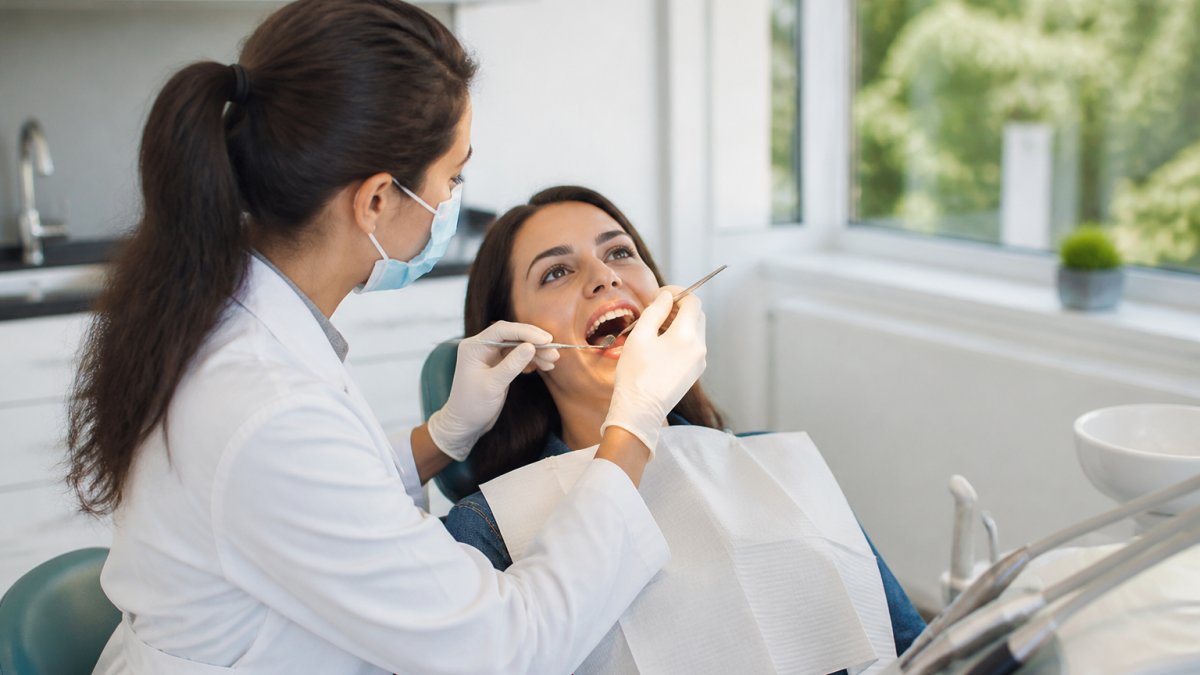
During your appointment, you’ll typically have:
- Visual examination of all teeth and gum tissue
- Assessment of your bite and jaw alignment
- Screening for oral cancer and other abnormalities
At Smile Design Studio, we explain what we find and answer your questions so you can make confident decisions about any treatment.
The appointment usually takes 30 to 45 minutes. New patients also discuss their dental history and concerns, helping us create a personalised treatment plan.
Ask your dentist for a written summary of your check-up findings. This gives you a clear record of your oral health and makes it easier to compare quotes if you choose to seek treatment elsewhere.
Private Dental Check-Up Cost: Pricing Breakdown
Private check-up fees are not set by any single regulator, so what you pay depends on the practice, the clinician’s experience, the time allocated, and what is bundled in. Across private practices in the Wakefield area, a routine examination for an existing patient and a new-patient examination, including a fuller history, a baseline chart of every tooth, and often a treatment plan, will have varying costs.
What the headline fee usually includes, and what it does not
Two clinics can advertise similar examination fees yet produce very different final bills because of what sits inside and outside the headline price.
| Item | Usually included in the check-up fee | Usually charged separately |
|---|---|---|
| Visual examination of teeth and gums | Yes | , |
| Medical and dental history review | Yes (new patients) | , |
| Soft-tissue and oral cancer screening | Yes | , |
| Bite and jaw assessment | Yes | , |
| Scale and polish (hygiene) | Sometimes, often not | £40-£90 |
| Intraoral X-rays | Rarely | £15-£35 per film |
| Full-mouth X-ray series (OPG) | No | £50-£100 |
| Written treatment plan | Yes | , |
| Fluoride varnish or fissure sealants | No | £20-£60 |
A practice advertising a check-up but charging separately for hygiene and X-rays is not necessarily poor value, it is simply unbundled. Comparison only becomes meaningful once you know which model you are looking at.
Why the same check-up costs different amounts
- Appointment length. A 20-minute examination and a 45-minute new-patient assessment are different products; longer appointments cost more and include more diagnostic work.
- Clinician seniority. A practice principal or dentist with a special interest typically charges more than a recently qualified associate.
- Location and overheads. City-centre practices with higher rent and equipment costs sit at the top of the local range.
A dated, transparent methodology
Prices reflect advertised private examination fees from practice websites and published fee guides for the Wakefield area, reviewed in October 2026. They are indicative only: fees change without notice, so treat every figure as a starting point for a conversation with the practice, not a quotation. Where a practice publishes a fee guide, that guide is authoritative for that practice.
When you call to book, ask three questions: what the examination fee covers, whether hygiene and X-rays are included, and whether the fee is the same for new and existing patients. The answers will tell you more than the headline price.
Compare practices on what is included, not just the number. An all-in new-patient fee of £120 that covers examination, X-rays and a hygiene visit can work out cheaper than a £50 examination plus £70 hygiene plus £30 X-rays.
Dental X-Ray Cost and When They’re Needed
X-rays show problems invisible to the naked eye, such as decay between teeth, bone loss, or tooth root issues.
Most private practices charge separately for X-rays.
You don’t need X-rays at every visit. Your dentist will recommend them based on your individual risk factors:
- First-time patients usually need X-rays to establish a baseline
- If you have a history of decay or gum disease, you may need them annually
- If your teeth are healthy and stable, you might only need them every two to three years
Ask your dentist why X-rays are needed and how often they recommend them; a good practice explains its reasoning and respects your budget. If you’ve had recent X-rays elsewhere, ask if they can be transferred to avoid repeats.
Avoid practices that automatically take X-rays at every visit without assessing your individual needs. This is unnecessary and adds to your costs without improving your care.
How Often to Have a Dental Check-Up
Most dental professionals recommend a check-up every six months, catching problems early when they’re cheaper and easier to treat.
However, the right frequency depends on your individual oral health:
- Healthy teeth and gums: Every 6 to 12 months
- History of decay or gum disease: Every 3 to 6 months
- Smokers or those with certain health conditions: Every 3 to 4 months
Your dentist will recommend a schedule based on your risk factors and dental history.
Regular check-ups prevent expensive problems later: a cavity caught early costs far less to treat than one ignored for two years, and untreated gum disease can lead to tooth loss.
At Smile Design Studio, we find a schedule that keeps your teeth healthy without unnecessary visits, and we send appointment reminders so you don’t end up with a gap in your care.
Understanding Your Private Dental Treatment Plan
After your check-up, your dentist should provide a clear treatment plan if any work is needed, outlining what is recommended, why, and what it will cost.
A good treatment plan includes:
- Description of each recommended treatment
- Cost for each individual item
- Total cost for all recommended work
Don’t feel pressured to accept treatment immediately. Take the plan home, review it, and ask questions, getting a second opinion or comparing quotes is entirely reasonable.
Some treatments are urgent (like a severe infection) while others can wait; your dentist should distinguish between the two, helping you budget and prioritise.
Request itemised quotes rather than a single total. This helps you understand exactly what you’re paying for and makes it easier to compare prices between practices.
Private Dental Care Versus NHS: What’s the Difference?
NHS and private dentistry are two different funding and delivery models, and many patients use both. Understanding how each works, and what you are entitled to, helps you decide what is right for your circumstances.
How NHS dental charges work
NHS dental care in England is organised into three charge bands, with a single charge covering all treatment within a band. The standard charges are:
- Band 1, examination, diagnosis, advice and, where clinically needed, a scale and polish.
- Band 2, everything in Band 1 plus fillings, root canal treatment and extractions.
- Band 3, everything in Bands 1 and 2 plus crowns, bridges, dentures and laboratory work.
Some patients are exempt from NHS dental charges, for example, those under 18 (or under 19 in full-time education), pregnant women and those who have given birth in the last 12 months, and people receiving certain means-tested benefits (the NHS). Ask the practice to check before treatment begins.
The practical reality of NHS access
NHS dentistry is not a guaranteed entitlement like GP registration. Practices hold finite NHS contracts, and many have closed their lists to new NHS patients or have long waiting lists. If you cannot find an NHS dentist locally:
- Use the NHS Find a Dentist service to search by postcode and filter for practices accepting new NHS patients.
- Call practices directly, lists change frequently, and a practice that was full last month may have space now.
- Contact NHS 111 if you have an urgent dental problem and no regular dentist; they can direct you to urgent care.
- Consider a dental access or urgent care centre for immediate problems while you continue to look for routine care.
Choosing private care is legitimate if you cannot access NHS care, want a specific clinician, or want treatments the NHS does not routinely provide, but it is not the only option.
Where the two models genuinely differ
| Aspect | NHS | Private |
|---|---|---|
| Cost structure | Fixed charge bands | Fee per item or per plan |
| Typical examination charge | Around £27 (Band 1) | £45-£140 depending on new/existing patient |
| Availability | Limited by contract; lists often closed | Generally available, sometimes same week |
| Appointment length | Usually shorter | Usually longer, more discussion time |
| Treatment range | Clinically necessary treatment | Full range, including cosmetic work |
| Choice of clinician | Limited to the practice’s NHS dentists | Full choice |
| Waiting times | Can be weeks or months | Usually days to weeks |
Mixing NHS and private care
It is entirely lawful and common to use both: you might see an NHS dentist for routine examinations and fillings, then pay privately for orthodontics, implants, or cosmetic treatment the NHS does not fund. If considering a mix, ask how the practice handles it and whether private treatment would affect your NHS entitlement, usually it does not, but it is worth confirming.
Do not assume that paying privately for one course of treatment removes your right to NHS care. The two are separate. If a practice tells you otherwise, ask for that in writing and seek advice from the NHS or the British Dental Association.
If you cannot find an NHS dentist, that is a reason to consider private care, not a reason to assume private care is your only choice. Exhaust the NHS routes first, then compare private options on inclusions and total cost, not headline price alone.
NHS dental charges and how to find an NHS dentist
How to Get a Written Quote and Compare Costs
Getting a written quote before committing to private dental treatment protects you, clarifies expectations, and lets you compare prices between practices.
Here’s how to get a quote:
-
Book a consultation. Most practices offer an initial appointment where the dentist assesses your needs.
-
Have a thorough examination. The dentist should examine your teeth, take any necessary X-rays, and discuss your goals and concerns.
-
Request a written quote. Ask for an itemised breakdown of recommended treatments with individual costs. Don’t accept a vague verbal estimate.
-
Ask about payment options. Clarify whether the practice offers payment plans, discounts for upfront payment, or any other financial arrangements.
-
Take time to decide. You’re under no obligation to proceed immediately. Take the quote home and think it over.
-
Compare multiple quotes. Contact two or three practices and compare their recommendations and prices. Be cautious if one quote is significantly lower than others, it may indicate less thorough assessment or lower-quality materials.
When comparing quotes, look beyond price: consider the dentist’s experience, the practice environment, patient reviews, and whether you felt comfortable during your consultation.
At Smile Design Studio, we provide clear, detailed quotes so you know exactly what to expect, explaining our recommendations and answering your questions before you decide to proceed.
Compare at least two quotes before committing to private dental treatment. A good practice welcomes this comparison and is confident in the value they provide.
Choosing private dental care is a significant decision, both for your oral health and your budget. At Smile Design Studio, we prioritise your comfort, explain your options clearly, and deliver personalised treatment plans that work for your needs and budget. The British Dental Association provides guidance on choosing a dentist and understanding dental costs. Book your consultation with us today and discover how quality private dental care can transform your smile and confidence.
Frequently Asked Questions
What is included in a private dental check-up?
A private dental check-up typically includes a thorough oral examination, assessment of your teeth and gums, discussion of your oral health history, and a personalised treatment plan if needed. Many practices include a professional clean and may offer intraoral photography to show you any concerns. Some practices include X-rays as part of the initial assessment, while others charge separately. Always ask what’s included in the advertised price before booking your appointment.
How much does a private dental check-up cost?
Private dental check-up costs vary depending on the practice, location, and what’s included in the appointment. Pricing depends on whether X-rays, professional cleaning, or additional assessments are part of the package. For current pricing and a written quote tailored to your needs, contact your local private dental practice directly. They can provide a clear breakdown of costs before you commit to treatment.
How often should I have a dental check-up?
Most dental professionals recommend a check-up every 6 to 12 months for adults with good oral health. However, your dentist may recommend more frequent visits if you have gum disease, a history of tooth decay, or other oral health concerns. During your initial assessment, your dentist will discuss the right frequency for your individual needs and create a personalised prevention plan.
Are X-rays included in the cost of a private dental check-up?
X-ray inclusion varies by practice. Some practices include a full set of X-rays as part of the initial new-patient examination, while others charge separately. The cost depends on the type of X-rays needed, standard bitewings are typically less expensive than full-mouth or 3D scans. Ask your practice upfront whether X-rays are included in the check-up fee or charged separately so there are no surprises.
Related posts