Why Private Dentistry Is Worth It: A Balanced Guide

Why Private Dentistry Is Worth It: A Balanced Guide
Table of Contents
- Why Private Dentistry Is Worth It: A Balanced Guide
- Private vs NHS Dentist: Key Differences That Matter
- Appointment Availability and Scheduling Flexibility
- Longer Appointments and More Time With Your Dentist
- Personalised Care and Individual Treatment Plans
- Private Dental Treatment Options Available
- Understanding Private Dental Check-Up Cost and Value
- Who Should Choose Private Dentistry?
- Scenario 1: You need urgent treatment and can’t wait
- Scenario 2: You need complex or cosmetic treatment
- Scenario 3: You’re anxious about dental treatment
- Scenario 4: Cost is your primary concern
- Scenario 5: You want routine care but premium treatment for specific issues
- Scenario 6: You have a long-term condition or need continuity
- A decision shortcut
- Questions to ask before committing
- The bottom line
- Frequently Asked Questions
Last Updated: October 15, 2026
Why Private Dentistry Is Worth It: A Balanced Guide
Understanding why private dentistry is worth it depends on your circumstances, whether it’s worth it for you comes down to what matters most: speed, choice, or continuity.
Private vs NHS Dentist: Key Differences That Matter
NHS dentistry operates under a fixed fee system: your dentist receives a set payment per patient regardless of time spent or treatment provided, creating an incentive to get through more patients. Private dentistry works differently, you pay directly for time and materials, so your dentist has incentive to spend time with you and use better materials if you want them.
Here’s where it matters in practice:
- Appointment length: NHS appointments are typically 15-20 minutes. Private appointments often run 30-45 minutes or longer, depending on what you need.
- Treatment options: NHS covers essential care. Private practices offer cosmetic treatments, premium materials, and techniques the NHS doesn’t fund.
- Continuity: NHS dentists manage high patient loads. Private practices often maintain smaller rosters, which can lead to more consistent care.
Appointment Availability and Scheduling Flexibility
NHS dental practices in many areas operate at or near capacity. New patient waiting lists exist in some regions, and routine appointments can take weeks or months to secure, though emergency appointments are prioritised.
This matters most if you work irregular hours, travel frequently, need prompt attention, or prefer to schedule routine care on your own timeline.
Longer Appointments and More Time With Your Dentist
Time is one of the most tangible benefits of private dentistry. A 15-minute NHS appointment covers a basic check-up and clean; a 30-45 minute private appointment allows discussion, you can ask questions about cost, discomfort, or aesthetics without feeling rushed. More time means thorough examination (early-stage issues are easier to spot when someone isn’t watching the clock), clearer explanation of why treatment matters, and a calmer pace that helps nervous patients.
Personalised Care and Individual Treatment Plans
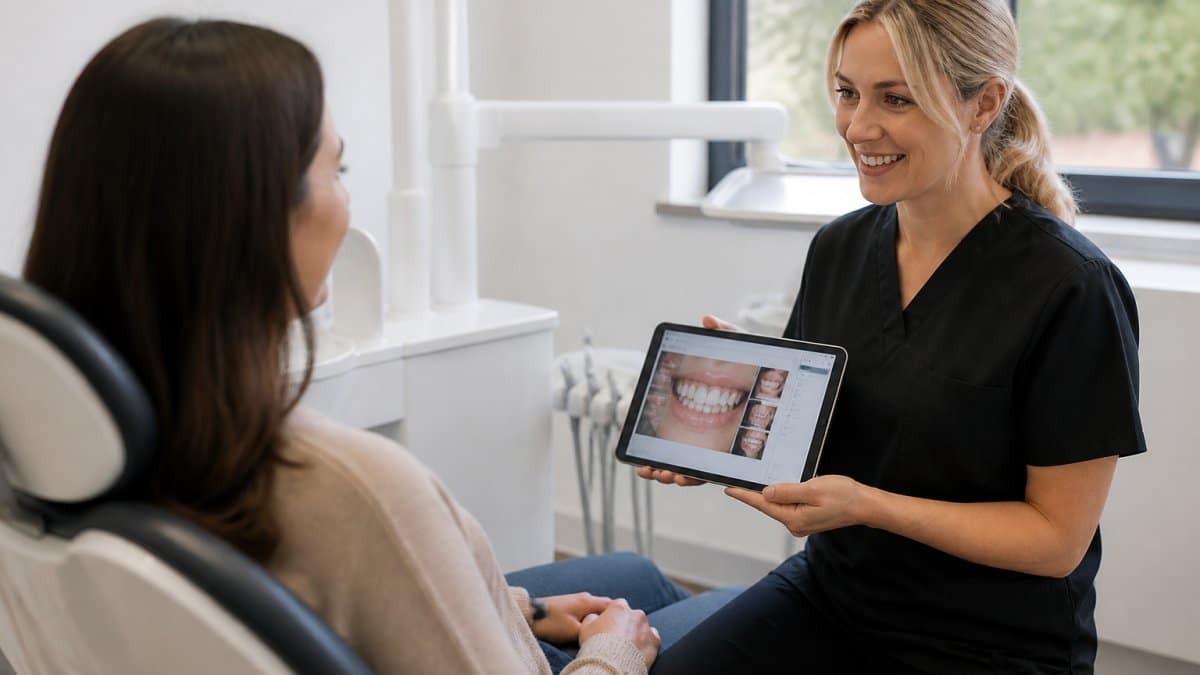
Personalised care means your treatment plan is built around your specific situation, your oral health history, aesthetic goals, budget, and comfort level, with multiple options explained so you can choose what matters to you.
Private Dental Treatment Options Available
Cosmetic treatments, teeth whitening, veneers, bonding, smile design, improve appearance but aren’t medically necessary, so the NHS typically doesn’t cover them.
Restorative work is available through both systems, but private practices offer more options and materials.
Preventive services like specialist cleaning or periodontal treatment are more readily available privately.
The key point: you’re not limited to what NHS contracts cover.
Understanding Private Dental Check-Up Cost and Value
Cost is the biggest reason people hesitate over private dentistry. Here’s how the two systems charge.
How NHS dental charges are structured
NHS dentistry in England uses a banded charging system. The bands are broadly:
- Band 1, examination, diagnosis, scale and polish, preventive advice: a single lower-tier charge (typically around £27-£28)
- Band 2, everything in Band 1 plus fillings, root canal treatment, and extractions: a mid-tier charge (typically around £75-£80)
- Band 3, everything in Bands 1 and 2 plus crowns, bridges, and dentures: a higher-tier charge (typically around £330-£340)
These figures are reviewed annually, so check the current published schedule before budgeting. Scotland, Wales, and Northern Ireland operate their own arrangements, and some patients are exempt entirely (under-18s in full-time education, pregnant women, new mothers, and certain benefit recipients).
Crucially, the band charge is a flat fee per course of treatment, not per tooth or visit, a Band 2 course covering three fillings costs the same as one covering a single filling.
How private fees are structured
Private dentistry doesn’t use bands, each procedure is priced individually, reflecting the clinician’s time, materials, laboratory costs, and overheads. Typical UK ranges:
- Private examination and check-up: £50-£120, depending on location and whether X-rays or a hygienist visit are included
- Scale and polish / hygiene appointment: £60-£120
- White (composite) filling: £90-£250 per tooth
These are indicative ranges, not quotes, fees vary by region, practice, and clinician experience.
What you’re actually paying for
When you compare a £27 NHS Band 1 charge with a £90 private check-up, the gap reflects:
- Time: A private check-up typically runs 30-45 minutes versus 15-20 minutes on the NHS, allowing for fuller examination, discussion, and preventive advice.
- Materials: Tooth-coloured composite versus amalgam, ceramic versus metal-backed crowns, premium implant systems versus NHS-funded alternatives.
- Technology: Intraoral scanners, digital X-rays, 3D imaging, and CAD/CAM same-day crowns are more common in private settings.
The value question, honestly framed
Private dentistry is not automatically better dentistry, a well-executed NHS filling can last as long as a private one. What you’re buying is choice, time, and access, not a guaranteed superior clinical outcome. Private care tends to deliver measurable value for complex or cosmetic cases, anxious patients who need longer appointments, time-poor patients who can’t wait weeks for an NHS slot, and patients needing specialist care without a long referral queue.
A worked example
Imagine you need a crown on a molar. On the NHS, that’s a Band 3 charge, roughly £330, for a metal-backed or standard porcelain crown.
The difference, around £400-£700, buys aesthetics, potentially longer lifespan, and a clinician with time to discuss the trade-offs. Whether that’s worth it depends on which tooth it is, how visible it is, and how much you value the aesthetic outcome.
Private fees aren’t a markup on NHS charges, they’re a different pricing model. Compare like-for-like: what’s included, how long the appointment is, what materials are used, and what aftercare is offered. A £90 check-up that includes X-rays, a hygienist visit, and a written treatment plan may be better value than a £50 check-up that includes none of those.
How to get an accurate quote
The only reliable way to compare is to:
- Ask the practice for a written, itemised treatment plan before you commit
- Confirm what’s included, X-rays, follow-up visits, lab fees, warranty on the work
- Ask whether the fee is fixed or estimated, and what happens if treatment becomes more complex
- Check whether the practice offers a payment plan or finance option
- Compare at least two practices if the treatment is significant
A reputable private practice will always provide a written estimate and explain variables before starting treatment. If a practice won’t put fees in writing, that’s a warning sign.
Who Should Choose Private Dentistry?
There’s no universal right choice, only a right choice for your circumstances. Here’s a scenario-based framework, including the option many patients overlook: combining NHS and private care.
Scenario 1: You need urgent treatment and can’t wait
Best fit: Private (or NHS urgent care, depending on severity)
If you’re in pain, have a broken tooth, or a lost filling, speed matters.
Private practices typically offer same-day or next-day emergency appointments. You’ll pay more, but you’ll be seen quickly.
Practical check: Call NHS 111 or use the NHS Find a Dentist tool first.
Scenario 2: You need complex or cosmetic treatment
Best fit: Private
NHS contracts cover clinically necessary treatment only, not whitening, veneers, clear aligners for mild cosmetic misalignment, or premium implant systems. Even where the NHS provides a treatment, material choice is limited.
Practical check: Ask whether the treating clinician has a special interest or postgraduate qualification in your area of need, complex cases benefit from someone who does that work regularly.
Scenario 3: You’re anxious about dental treatment
Best fit: Private, or an NHS practice with a specific anxiety protocol
Dental anxiety is common, and the NHS system isn’t well designed for it, short appointments and high turnover leave little room for the unhurried approach anxious patients need.
Private practices can offer longer appointments, sedation options, and a pace that suits you. Some NHS practices offer these too, but availability is limited.
Practical check: Ask whether the practice offers sedation and whether the dentist has experience with anxious patients.
Scenario 4: Cost is your primary concern
Best fit: NHS, if you can access it
If your budget is tight and you only need routine care, NHS dentistry is designed for you, band charges are heavily subsidised and certain groups are exempt entirely.
The catch is access.
Practical check: Use the NHS Find a Dentist service and filter for practices accepting new adult patients. If none are local, join a waiting list and consider a private check-up in the meantime.
Scenario 5: You want routine care but premium treatment for specific issues
Best fit: Mixed NHS and private care
This is the option most patients don’t realise is available: NHS care for routine examinations and preventive treatment, plus private payment for specific treatments, cosmetic work, implants, or faster access.
Practical check: Ask directly: “Do you offer both NHS and private treatment, and can I choose per course of treatment?”
Scenario 6: You have a long-term condition or need continuity
Best fit: Private
If you have periodontal disease, a complex restorative history, or a medical condition affecting your oral health, continuity matters, seeing the same clinician means your history is understood and subtle changes are noticed early.
NHS practices can offer continuity, but high patient loads and dentist turnover make it less reliable; private practices typically maintain smaller lists.
Practical check: Ask how many patients the practice has per dentist, and whether you’ll see the same clinician at every visit.
A decision shortcut
- How soon do you need to be seen? If within days, private is usually the only realistic route.
- Is the treatment clinically necessary, or does it include an aesthetic goal? If aesthetic, private is almost always required.
- Can you access an NHS practice accepting new patients locally? If not, private may be your only option regardless of preference.
Private dentistry does not guarantee immediate appointments. Popular practices in some areas have their own waiting lists, and specialist clinicians may be booked weeks ahead. Always confirm availability before assuming private care means instant access.
Questions to ask before committing
Whichever route you choose, ask before treatment begins:
- What are my treatment options, and what are the alternatives?
- What happens if I choose no treatment?
- What is the total cost, and is it fixed or estimated?
A good dentist, NHS or private, will welcome these questions. If you feel rushed or dismissed, that’s useful information about the practice.
The bottom line
Private dentistry is worth it when it solves a problem you actually have: speed, choice, continuity, comfort, or access to treatments the NHS doesn’t fund.
The mixed approach, NHS for routine care, private for specific needs, is often the most cost-effective middle ground, and more widely available than many patients realise.
Frequently Asked Questions
Is private dentistry really worth the extra cost compared to NHS care?
Private dentistry offers benefits that justify the investment for many patients: longer appointments, more treatment options, shorter waiting times, and personalised care plans. However, worth depends on your priorities. If routine check-ups are your main need and you can access NHS care, the difference may be less significant. For cosmetic work, complex restorative treatment, or if you value continuity and shorter waits, private dentistry often delivers better value. Consider your specific dental needs and budget before deciding.
What is included in a private dental check-up cost, and how does it compare to NHS charges?
A private dental check-up typically includes a thorough examination, often with advanced imaging, oral health advice tailored to your needs, and a detailed treatment plan if issues are found. Private practices use premium materials and advanced techniques. Costs vary by practice and location. The NHS offers routine check-ups at lower cost but may have longer waiting times and less flexibility in appointment scheduling. Contact your chosen private practice directly for current pricing and what their check-up includes.
What private dental treatment options are available beyond what the NHS offers?
Private dentistry provides access to cosmetic treatments like teeth whitening, veneers, and smile makeovers, plus advanced restorative options using premium materials. You’ll find faster access to orthodontics, implants, and specialist procedures. Private practices often offer sedation options for nervous patients and can dedicate more time to complex cases. Many also provide bespoke treatment plans that combine cosmetic and functional improvements. Your private dentist can discuss which options suit your goals and budget during a consultation.
How quickly can I get a private dental appointment compared to waiting for NHS care?
Private practices typically offer faster access to appointments than NHS services, often within days or weeks rather than months. Availability depends on the practice and your location. Many private dentists reserve slots for new patients and offer flexible scheduling. However, appointment speed varies by practice, so contact your chosen provider directly to confirm their typical waiting times for new patients and routine appointments.
Choosing the right dental care comes down to understanding what you need and what trade-offs you’re willing to make. At Smile Design Studio, we work with patients who’ve made both choices, and we respect either path. If you’re considering private dentistry, we’d welcome a conversation about what’s possible and what makes sense for your specific situation. Book an appointment to discuss your dental goals and explore the options that work best for you.
Related posts