How to Fix Uneven Dental Veneers: A Patient Guide
How to Fix Uneven Dental Veneers: A Patient Guide
Table of Contents
- Understanding Why Dental Veneers Become Uneven
- Signs of Poorly Fitted Veneers
- Assessment: Determining What Needs to Be Fixed
- Fixing Uneven Veneers: Your Correction Options
- Veneers vs Composite Bonding for Uneven Teeth
- Porcelain Veneer Replacement Cost and Timeline
- Preventing Future Veneer Problems
- Frequently Asked Questions
Last Updated: September 24, 2026
Understanding Why Dental Veneers Become Uneven
Understanding why veneers become uneven is essential, how to fix uneven [dental veneers](/service/veneers/) depends entirely on the root cause, and misdiagnosis leads to repeated failures.
Cementation and Bonding Failures
The most common cause is inadequate bonding during placement. If the tooth wasn’t properly etched, moisture contaminated the surface, or adhesive wasn’t applied evenly, the veneer can shift. Over months, the bond weakens unevenly, creating a visible tilt.
Gum Recession and Margin Exposure
Gum recession is the second most common cause. When gums recede, the veneer margin becomes visible and doesn’t match your natural tooth colour, making a perfectly placed veneer look uneven.
Recession results from aggressive brushing, gum disease, bite trauma, or ageing. Teeth grinding accelerates recession by stressing the gum attachment.
As recession progresses, more veneer margin shows. Early detection at six-month check-ups prevents visible problems.
Bite Force Misdistribution
If a veneer is positioned even slightly high, it contacts opposing teeth before other veneers, creating uneven bite pressure.
Uneven bite pressure causes the high veneer to crack or shift, the bond to fail, and jaw tension or discomfort.
A veneer positioned 0.5 mm too high may feel fine initially but will shift or fail after months of uneven pressure.
Material Settling and Shrinkage
Resin cements under porcelain veneers can create microscopic gaps if the veneer wasn’t held under consistent pressure, allowing fractional shifts.
Tooth Preparation Errors
Inconsistent tooth preparation causes veneers to sit at different depths or angles. If one tooth is over-prepared and another under-prepared, veneers will tilt.
Gum Line Asymmetry
Good veneer placement accounts for natural gum asymmetry. Ignoring it causes some veneers to look too high or too low.
Even a 1 mm difference in veneer height on your two front teeth is noticeable because your eye naturally compares them.
The best way to prevent uneven veneers is to choose a dentist who uses systematic assessment tools: bite registration paper to check contact points, digital smile design software to preview placement, and preparation guides to ensure consistent depth. Ask your dentist about their process before committing.
Signs of Poorly Fitted Veneers
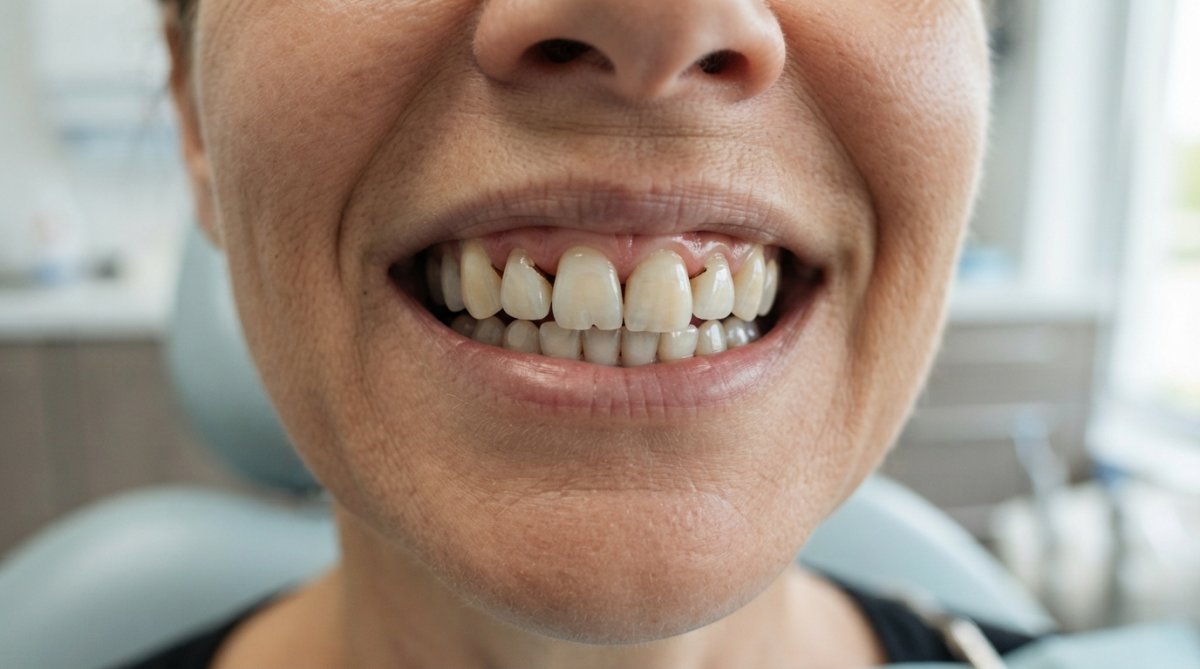
Visible gaps between veneers and natural teeth are the most obvious sign of poor fit. Light passing through these spaces indicates the veneer isn’t sitting flush.
Uneven height makes your smile look lopsided. Run your tongue across your front teeth, you should feel a smooth surface. Rough edges or steps suggest poor fit.
Discomfort when closing your mouth or uneven pressure on one side indicates veneers are sitting at the wrong angle.
Shade mismatches indicate poor fitting, veneers at different angles catch light differently and appear to be different colours.
Gum irritation around veneer edges suggests they’re not fitted correctly. Healthy gums should meet the veneer smoothly. If your gums bleed, swell, or feel tender around a veneer, the edge is likely sitting where it shouldn’t be.
Ignoring signs of poorly fitted veneers can lead to decay underneath. Gaps allow bacteria and food debris to accumulate between your veneer and natural tooth. This decay is harder to spot and harder to treat once it starts.
Assessment: Determining What Needs to Be Fixed
Your dentist should examine each veneer individually, checking gum line position, edge visibility, bite contact, colour match, and signs of decay. X-rays reveal bonding gaps and hidden decay risk.
Bite assessment using registration paper shows contact points. Uneven marks indicate veneers are sitting at different heights.
Ask your dentist to show you the problems with a mirror. Understanding why the veneer looks or feels wrong helps you choose the right fix.
Fixing Uneven Veneers: Your Correction Options
You have two main paths forward to fix uneven dental veneers: adjust and refine your existing veneers, or replace them entirely. The right choice depends on what’s actually wrong and how much correction is needed.
Veneer Adjustment and Refinement
Minor unevenness can be corrected by polishing the veneer surface to improve light reflection and adjusting the gum line edge.
Bite refinement uses special burs to grind high spots on the veneer surface, distributing bite pressure more evenly.
Polishing improves texture and light reflection, restoring the original appearance of rough or dull veneers.
Adjustment and refinement cost less and take one appointment but work only for minor issues. Cracked, severely stained, or severely misaligned veneers require replacement.
Veneer Replacement
Replacement is necessary when adjustment won’t fix the problem. It allows your dentist to address the original cause of unevenness.
Modern replacement veneers benefit from better planning, more precise bite measurement, gum line assessment, and positioning.
Replacement lets you upgrade materials, from composite to porcelain, or add multiple veneers for better symmetry.
Removal is irreversible, your dentist grinds away the veneer and bonding material, removing a thin tooth layer. You’ll need a veneer or crown permanently.
Replacement typically takes two appointments: removal/preparation, then fitting/bonding later.
Veneers vs Composite Bonding for Uneven Teeth
Porcelain veneers are stronger, resist staining, and last 10-15+ years but require tooth removal and cost more. Composite bonding requires minimal tooth removal, is faster and cheaper, but stains easily and lasts 5-7 years.
Porcelain veneers offer better aesthetics and longevity for fixing uneven teeth. Composite bonding suits patients wanting a reversible option.
At Smile Design Studio, we discuss both options with you and explain which suits your situation. The choice depends on your budget, how long you want the correction to last, and whether you prefer minimal tooth removal.
Porcelain veneers work best for patients who want a long-lasting, stain-resistant correction and don’t mind minimal tooth preparation. Composite bonding suits patients who want a reversible option or prefer to avoid permanent tooth modification.
Porcelain Veneer Replacement Cost and Timeline
Replacement costs vary based on the number of veneers, material quality, dentist experience, and additional work like gum contouring.
First appointment: removal and preparation with impressions. Lab fabrication takes 7-10 working days. Second appointment: fitting and bonding.
For current pricing and timelines specific to your situation, contact Smile Design Studio directly. Costs depend on your individual needs, and we provide transparent quotes after assessing your teeth.
Preventing Future Veneer Problems
After fixing uneven veneers, maintenance must be vigilant. Corrected veneers are at higher risk of failing again without addressing the original cause.
Address the Root Cause of the Original Failure
Understand why your veneers became uneven. If bite-related, use a night guard. If gum recession, change brushing technique. If cementation failure, understand the corrective approach.
Manage Bite Forces Carefully
A custom-fitted night guard is the most effective preventive tool for bite-related unevenness. It distributes bite forces evenly and protects veneers and natural teeth.
Wear your night guard every night.
Consciously relax daytime clenching, which creates the same uneven pressure as night grinding. Stress-management or physiotherapy may help.
Chew evenly on both sides. Uneven chewing creates uneven bite pressure.
Monitor Gum Health Aggressively
Brush gently with a soft-bristled toothbrush using circular motions. Aggressive brushing causes recession and damages veneer margins.
Floss daily gently around veneer margins.
Schedule professional cleanings regularly to catch early recession signs.
Protect Against Trauma and Impact
Corrected veneers are more vulnerable to trauma. A custom-fitted mouthguard is essential for contact sports.
Schedule Preventive Check-Ups
Don’t wait until you notice a problem. Schedule regular check-ups. Early detection of veneer problems can be more manageable than emergency treatment.
At each check-up, ask your dentist to:
- Check the veneer margins for gaps or lifting
- Assess your gum line for recession
- Test your bite with registration paper to ensure pressure is still even
- Look for early signs of decay around veneer edges
- Evaluate the veneer surface for cracks or chips
Maintain Excellent Oral Hygiene Around Margins
Decay underneath a veneer is the most expensive problem to fix because the veneer often needs removal to access the decay. Prevention is far cheaper than treatment. Plaque and bacteria accumulate around veneer margins, especially if the margin sits below your gum line.
Avoid Staining and Discolouration
If you had composite veneers placed as a corrective measure, they stain more easily than porcelain. Coffee, red wine, tea, and smoking all stain composite over time.
Patients who’ve had corrective veneer work should treat their veneers like a second chance. The habits you adopt now determine whether your correction lasts 10+ years or fails again within a few years. Prevention is always cheaper than correction.
Frequently Asked Questions
What are the main signs that my dental veneers are poorly fitted?
Common signs include visible gaps between the veneer and tooth edge, uneven height across multiple veneers, noticeable colour mismatch, rough or sharp edges, and discomfort when biting. You may also notice the veneers feel loose or the underlying tooth feels sensitive. If you experience any of these issues, a clinical consultation with a qualified dentist can determine whether adjustment or replacement is needed.
Can existing uneven dental veneers be fixed without full replacement?
Sometimes, yes. Minor unevenness can be corrected through enameloplasty (careful contouring of the veneer surface) or by adjusting the bonding agent and repolishing. However, significant misalignment, substantial colour mismatch, or structural damage usually requires veneer replacement. Your dentist will assess whether your veneers can be refined or if replacement is the better solution for achieving proper occlusion and aesthetic correction.
How does composite bonding compare to porcelain veneers for fixing uneven teeth?
Composite bonding is a minimally invasive alternative that builds up tooth structure with tooth-coloured resin, while porcelain veneers are custom ceramic shells bonded to the front of teeth. Composite bonding is less expensive and requires less tooth preparation, but may not last as long or resist staining as well. Porcelain veneers offer superior durability, shade matching, and aesthetic results. Your choice depends on your budget, desired longevity, and the extent of correction needed.
What should I expect during a veneer replacement consultation?
Your dentist will examine the existing veneers, assess tooth structure underneath, take dental impressions, and discuss your aesthetic goals. They’ll explain the removal process, any tooth preparation needed, and the timeline for your new veneers. You’ll receive clear information about how the replacement will address your specific concerns, such as improving smile symmetry or correcting shade matching issues, so you can make an informed decision about your treatment.
Uneven dental veneers don’t have to stay that way. Whether your veneers need adjustment, refinement, or replacement, the solution depends on what’s actually wrong. At Smile Design Studio, we assess each veneer individually, explain your options clearly, and help you choose the approach that gives you the smile you want. Book an appointment to discuss how we can fix your veneers and prevent problems in the future.
Related posts