How to Book a Private Dental Appointment: 2026 Guide
How to Book a Private Dental Appointment: 2026 Guide
Table of Contents
- Why Patients Choose Private Dental Appointments
- Private vs NHS Dental Treatment: Key Differences
- Step-by-Step: How to Book a Private Dental Appointment
- New Patient Registration and Your First Visit
- Understanding Private Dental Check-Up Costs
- Does Dental Insurance Cover Crowns and Other Treatments?
- Booking with Confidence: Tips for Nervous Patients
- Conclusion
- Frequently Asked Questions
Last Updated: September 30, 2026
Why Patients Choose Private Dental Appointments
A private dental appointment is a scheduled visit with a dentist paid directly by the patient or their insurer, rather than through NHS funding.
Shorter Waiting Times and Flexible Scheduling
The biggest draw is speed. Many people wait weeks or months for an NHS dental appointment, and some practices have closed their lists to new patients entirely. With private dentistry, you pay for the appointment, so you choose the time.
That means:
- Evening and weekend slots are often available
- Same-day appointments may be available for urgent problems
- Flexible scheduling fits around work and family
- Short notice appointments are easier to arrange
Continuity of Care and Patient-Centred Treatment
The second draw is continuity. You see the same dentist at each visit, so they learn your history and your preferences. Nothing gets lost between appointments.
Private vs NHS Dental Treatment: Key Differences
The core difference is funding. NHS dental treatment is subsidised by the state and priced in fixed bands, while private dentistry is priced by the practice and paid by you or your insurer. That shapes everything else, from waiting times to materials used.
Here is how the two compare in practice:
| Factor | NHS Dental Treatment | Private Dental Treatment |
|---|---|---|
| Waiting times | Often several weeks or longer | Often shorter than NHS waits |
| Choice of dentist | Limited to available clinicians | You are likely to see the same dentist at each visit |
| Appointment length | Shorter, tightly scheduled | Longer, more thorough |
| Treatment options | Limited to what is clinically necessary | Wider range, including cosmetic work |
| Cost | Banded charges set nationally | Set by the practice, varies |
| Continuity | May see different dentists | Same dentist each visit |
Step-by-Step: How to Book a Private Dental Appointment
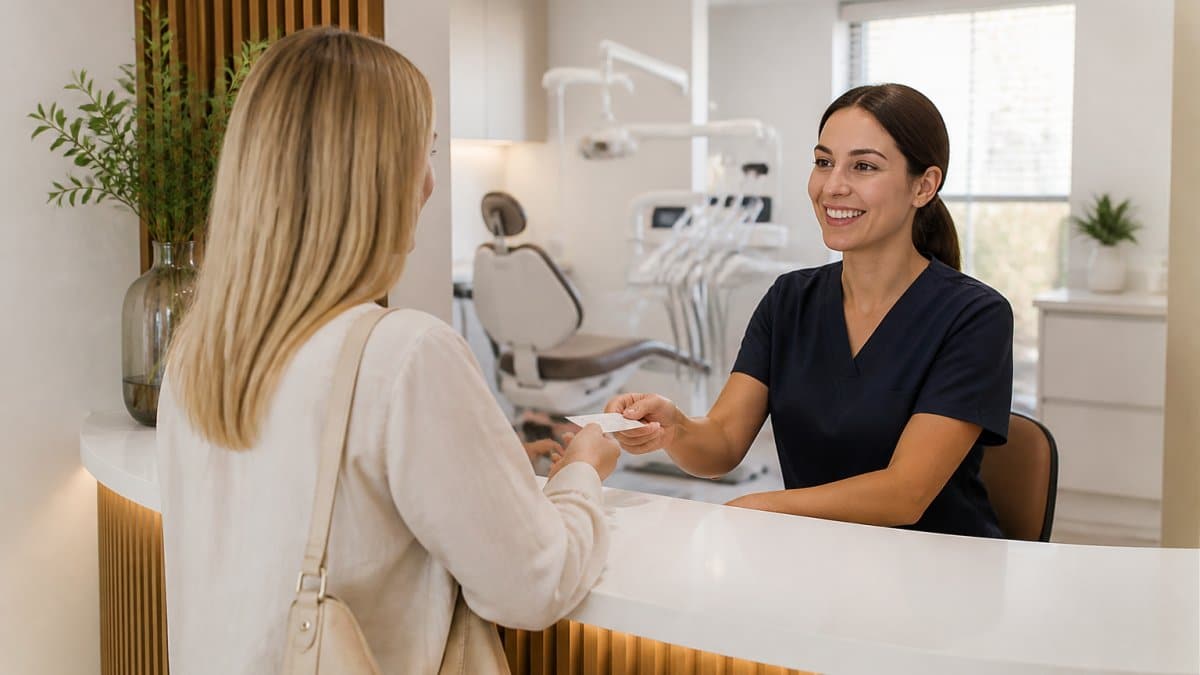
Booking privately is simpler than most people expect, usually under ten minutes, and often without a phone call.

Here is the process, step by step:
- Find a practice near you. Search for private dentists in your area and check their websites for services, opening hours, and whether they treat children.
- Check they are accepting new patients. Not all practices are, so confirm this first, a quick phone call or a line on the homepage usually settles it.
- Choose your booking method. Online suits routine visits; phone suits anything urgent or complicated.
- Provide your details. Name, date of birth, contact number, email, and a brief note on why you need the appointment. If you are in pain, say so, this changes how the practice triages you.
- Confirm the appointment. You will usually get an email or text confirmation. Check the time, clinician’s name, and address.
- Note the cancellation policy. Most practices ask for 24 to 48 hours’ notice to reschedule; short-notice cancellations can trigger a fee.
- Attend your first visit. Arrive a few minutes early to complete any remaining paperwork.
What You’ll Need Before You Book
Have these ready, and booking takes minutes:
- Your personal details and contact number
- A list of any medicines you take, including doses
- Your dental history, previous practice, last X-ray date, any treatment in progress
- Details of any dental insurance policy, including policy number and insurer’s phone line
- Your main concern or symptom, and roughly how long it has been going on
- Payment method, most practices take card, and some ask for a deposit when booking
If you are in pain, say so when you book, practices triage urgent cases and can often fit you in faster. “I have throbbing pain that wakes me at night” signals urgency more clearly than “I need an appointment”.
Booking Online, by Phone, or in Person
An online booking system is the fastest route for routine visits: pick a time, fill in a short form, get instant confirmation. It works outside office hours and makes comparing slots across a week easy.
What Happens After You Book
Once your slot is confirmed, a few things typically happen before you arrive:
- The practice sends a medical history form to complete online or on paper
- You may be asked to pay a deposit, usually deducted from your treatment cost
- For urgent cases, a clinician may call to triage the problem
- You receive a reminder text or email a day or two before
If you are booking for a child, mention their age at the point of booking. Many practices schedule children earlier in the day and allow extra time for a first visit.
What to Expect During Your Visit
Your first appointment is mostly information gathering. The dentist will examine your teeth, gums, and soft tissues, take X-rays if needed, and ask about your medical history and concerns. You should leave with a clear understanding of your treatment options and costs. If anything is unclear, ask before you leave the chair.
New Patient Registration and Your First Visit
New patient registration is the process of joining a practice so it can hold your records and book ongoing care. It usually takes a short form and a first appointment, turning a one-off visit into a proper dental relationship.
Your first visit typically includes:
- A full dental exam and clinical assessment
- X-rays if needed
- A check of your gums and soft tissues
- A discussion of any concerns
- A written treatment plan with options and costs
Understanding Private Dental Check-Up Costs
Private dental check-up cost varies by practice, location, and how much work the examination involves. There is no single national figure, so ask the practice directly, most publish a fee guide or confirm prices when you book.
What drives the price:
- The length of the appointment
- Whether X-rays or extra tests are needed
- The dentist’s experience and any specialist skills
- The practice’s location and overheads
- Whether you are a new or returning patient
Never assume a quoted “check-up” price covers everything. Ask what is included and what would cost extra. X-rays, gum measurements, and follow-up appointments are common add-ons, and the final bill can surprise you if you do not check first.
How to Compare Quotes Fairly
Comparing private dental prices is not as simple as picking the lowest number. Two practices can quote very different figures for the same-sounding check-up, because appointment length, diagnostic tools, and follow-up all differ.
- How long is the appointment?
- Are X-rays included, or charged separately?
- Is a written treatment plan included in the fee?
- What is the cost of a hygiene appointment, separately?
- Is there a deposit, and is it refundable if I cancel?
- What is the cancellation window before a fee applies?
- Do you offer a membership plan, and what does it include?
Payment Plans and Membership Schemes
Payment plans and membership schemes are common in private dentistry. These spread the cost of routine care across monthly payments, usually bundling exams, hygiene visits, and a discount on other treatment. If you plan to attend regularly, a plan often works out cheaper than paying per visit.
Typical structures you will see:
- Maintenance plans, a monthly fee covering two check-ups and two hygiene visits a year, plus a percentage discount on restorative work.
- Treatment finance, interest-free or low-interest credit spread over several months for larger work such as crowns, implants, or orthodontics.
- Children’s plans, reduced monthly fees, sometimes free for under-fives when a parent is a member.
What to Ask Before Any Treatment Begins
You are entitled to a written treatment plan before you agree to anything. Ask for it in writing, not just verbally, and check that it lists:
- Each treatment recommended, and why
- The cost of each item, not just a total
- Any alternatives, including doing nothing
- What happens if the treatment needs to be redone
- Whether the price is fixed or an estimate
Does Dental Insurance Cover Crowns and Other Treatments?
Dental insurance often covers part of the cost of crowns, but rarely the full amount. Most policies pay a percentage of the fee, up to an annual limit, and the rest is yours to pay.
What typically affects cover:
- Policy type. Some plans cover routine care only; others include restorative work.
- Annual limits. Once you hit the cap, you pay the rest yourself.
- Waiting periods. Many policies will not pay for major work in the first months.
- Pre-authorisation. Insurers often want the treatment approved before it starts.
- Exclusions. Cosmetic work is frequently excluded, and pre-existing problems may be too.
Booking with Confidence: Tips for Nervous Patients
Dental anxiety is common, and it is nothing to be embarrassed about. The key is to tell the practice before your appointment, not on the day, so they can plan your visit around what you need.
A step-by-step approach that works well:
- Say you are nervous when you book. Ask for a longer first appointment.
- Ask for a “look only” visit. You can meet the dentist and talk, with no treatment.
- Agree a stop signal. A raised hand means the dentist pauses immediately.
- Bring someone with you. A familiar face in the room helps.
- Book early in the day. Anxiety tends to build as the appointment gets closer.
- Ask about sedation options. Some practices offer ways to take the edge off.
- Start small. A check-up first, then decide about treatment.
Conclusion
Booking private dental care is straightforward once you know the steps, but the harder part is often deciding whether to make the call at all. Waiting lists, cost worries, and old bad experiences keep people away far longer than they should.
Frequently Asked Questions
Do I need a referral to see a private dentist?
No, you do not need a referral to book a private dental appointment. You can contact a private practice directly to register as a new patient. Some practices may ask for details of your previous dentist so they can request your dental records, but this is not a barrier to booking. If you have a specific clinical concern, you can still self-refer. The practice will carry out its own clinical assessment during your first visit and discuss a treatment plan with you.
Can I book a private dental appointment online?
Many private practices offer an online booking system or booking portal where you can request an appointment at a time that suits you. You typically provide your name, contact details, and a brief description of what you need. The practice then confirms your appointment by phone or email. If online booking is not available, you can call the practice directly. Short-notice appointments may be available depending on appointment availability.
How much does a private dental check-up cost?
Private dental check-up costs vary between practices and depend on the complexity of the examination and any additional assessments needed. Most practices publish their fee schedule on their website or provide it when you enquire. At Smile Design Studio, pricing is confirmed before treatment so you can make an informed decision. For current fees, check the practice website or contact the reception team directly.
Is it worth going private for a dentist?
Whether private dentistry is worth it depends on your priorities. Private dental treatment typically offers shorter waiting times, longer appointments, and a wider range of cosmetic dentistry and restorative options. You also get continuity of care with the same dentist. NHS dental treatment is more affordable but availability varies and waiting lists can be long. Many patients choose private care for flexible scheduling, preventative care, and treatments not routinely available on the NHS.
Related posts