10 Restorative Dentistry Options for Missing Teeth

10 Restorative Dentistry Options for Missing Teeth
Last Updated: November 7, 2026
Quick Summary
Restorative dentistry offers ten main options for missing teeth, including resin-bonded, conventional and cantilever bridges, single and implant-supported implants, partial and full dentures, and bone grafting. The right choice depends on how many teeth are missing, their position, jawbone health and budget. Fixed options generally cost more than removable ones but implants help preserve the jawbone.
- A resin-bonded bridge is often the most conservative choice for one missing front tooth.
- A single implant typically takes three to six months in total, longer if grafting is needed.
- Bridges can often be completed in two or three visits over a few weeks.
- Dentures do not prevent bone loss and may need relining as the ridge changes.
- Uncontrolled diabetes, smoking and poor gum health all affect implant suitability.
Table of Contents
- The Ten Restorative Dentistry Options at a Glance
- How to Replace a Missing Tooth Without an Implant
- Dental Implants and Implant-Supported Restorations
- The Dental Bridge for Missing Teeth: Fixed and Resin-Bonded Types
- Dentures for Missing Teeth: Partial, Full and Implant-Supported
- The Cost of Replacing a Missing Tooth and What Drives It
- Choosing Between Fixed and Removable Restorations
- Book a Restorative Consultation at Smile Design Studio
- Frequently Asked Questions
The Ten Restorative Dentistry Options at a Glance
Restorative dentistry is the branch of dental care that rebuilds teeth damaged by decay, injury or loss, and it offers more routes back to a full smile than most people realise. Restorative dentistry offers several routes to replacing missing teeth. The right choice depends on how many teeth are gone, where they sit, the health of the jawbone and neighbouring teeth, and how much you want to spend. Below, we compare the main options side by side, with trade-offs on cost, comfort and longevity.
| Option | Fixed or Removable | Best For | Typical Longevity |
|---|---|---|---|
| Resin-bonded bridge | Fixed | One missing front tooth | Moderate |
| Conventional fixed bridge | Fixed | One to three adjacent missing teeth | Long |
| Cantilever bridge | Fixed | One missing tooth with sound neighbours | Moderate |
| Single dental implant | Fixed | One missing tooth, good bone | Long |
| Implant bridge | Fixed | Several missing teeth in a row | Long |
| Partial denture | Removable | Several missing teeth, some remaining | Moderate |
| Full denture | Removable | Entire arch missing | Moderate |
| Implant-supported denture | Removable | Full arch, better grip wanted | Long |
| Bone graft plus implant | Fixed | Bone loss before an implant | Long |
| Tooth-supported overdenture | Removable | A few sound teeth remain | Moderate |
If you want the wider picture first, our guide to fixing damaged teeth with restorative dentistry shows how these missing-tooth treatments sit alongside repairs for teeth that are still in place.
How to Replace a Missing Tooth Without an Implant
A common way to replace a missing tooth without an implant is a dental bridge, which anchors a replacement tooth to the healthy teeth on either side. Bridges are fixed, so they do not come out at night. There are three main types:
- Resin-bonded bridge: a replacement tooth bonded to the back of a neighbour with a metal or ceramic wing. Minimal drilling, often used for front teeth.
- Conventional fixed bridge: crowns on the two supporting teeth, with the replacement fused between them. Strong and proven, but it does trim healthy enamel.
- Cantilever bridge: anchored on one side only, useful when there is just one sound tooth beside the gap.
The trade-off is that bridges load the supporting teeth, and those teeth need careful cleaning underneath. A common mistake is choosing a bridge without checking that the adjacent teeth are strong enough to carry the extra work. Where they are not, a removable option may serve you better.
Dental Implants and Implant-Supported Restorations
A dental implant is a titanium post placed into the jawbone to act as an artificial tooth root, topped with a crown, bridge or denture (Dental Implants). Implants are the closest thing to a natural tooth because they preserve the jawbone and do not rely on neighbouring teeth for support. Healing time typically runs several months while the bone fuses to the post, and suitability depends on bone volume, gum health and general health. If bone has shrunk, a bone graft can rebuild the site first. For a fuller look at value over time, read our guide on whether dental implants are worth the cost.
The Dental Bridge for Missing Teeth: Fixed and Resin-Bonded Types
A dental bridge for missing teeth is a fixed restoration that fills a gap by anchoring an artificial tooth to the teeth or implants on either side. It restores chewing function and appearance without the daily routine of removing a denture. Fixed bridges last well with good oral hygiene, though the supporting teeth and the gumline beneath the bridge need diligent cleaning to prevent decay. Resin-bonded versions are more conservative but can debond over time. Your dentist will assess bite, adjacent teeth and gum health before recommending a type. The NHS guide to dental treatments explains the general principles behind bridges and when they are considered.
Dentures for Missing Teeth: Partial, Full and Implant-Supported
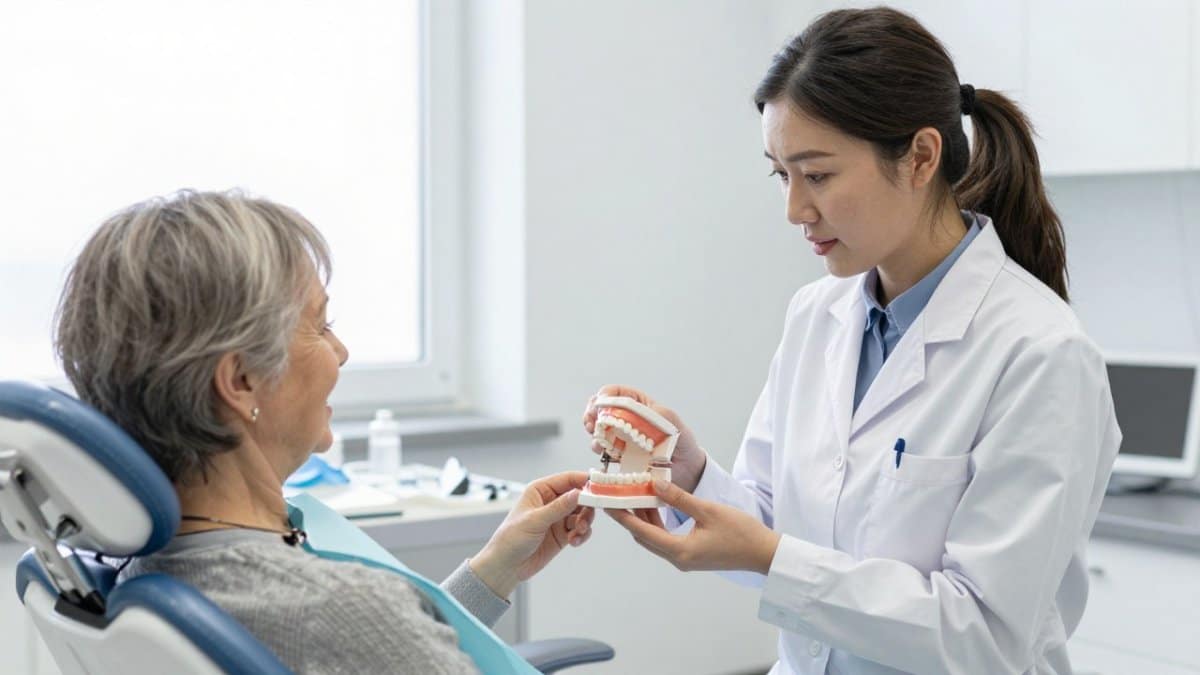
Dentures for missing teeth are removable prosthetics that replace several teeth or an entire arch, resting on the gums and any remaining teeth. A partial denture fills gaps where some natural teeth remain, clipping onto them for stability. A full denture replaces a whole arch and relies on suction and the shape of the gum ridge. An implant-supported denture is a removable option that clips onto implants for a firmer grip and less slipping.
The man is British.
The Cost of Replacing a Missing Tooth and What Drives It
Cost is the question patients ask first, and the honest answer is that it varies.
| Cost driver | What it changes | Typical effect on price |
|---|---|---|
| Number of teeth replaced | More units mean more laboratory work and more chair time | Rises with each additional tooth |
| Fixed vs removable | Fixed restorations need more clinical work and precision | Fixed generally costs more than removable |
| Implant components | Implant, abutment and crown are separate items | Each implant adds a significant component cost |
| Bone grafting or sinus lift | Rebuilds the site before an implant can be placed | Adds a surgical stage and healing time |
| Extractions or gum treatment | Prepares the mouth before restoration | Adds appointments and fees |
| Material choice | Metal, ceramic, zirconia and acrylic vary widely | Premium materials cost more but may last longer |
| Laboratory and technician time | Complex or aesthetic cases need more lab work | Raises the laboratory element of the fee |
| Sedation or nervous-patient support | Extra clinical time and monitoring | Adds a separate fee where offered |
On the NHS, treatment is available where there is a clinical need and is charged under a banded system; the official NHS website sets out the current charge bands, which you should check directly (the NHS).
Pricing depends on the treatment, the clinical assessment and the materials used. For current prices or a quote, please contact Smile Design Studio directly or visit our website.
Choosing on the lowest headline quote alone can overlook the assessment steps that influence how long a restoration lasts, so it is worth comparing what each quote includes.
For a detailed breakdown of the biggest single cost driver, see our guide on how much private dental implants cost.
Choosing Between Fixed and Removable Restorations
The comparison below sets out general practical differences that matter day to day.
| Factor | Fixed (bridge, implant, implant bridge) | Removable (partial, full, implant-supported denture) |
|---|---|---|
| Removal for cleaning | No, cleaned in place with interdental brushes or floss threaders | Yes, removed nightly and cleaned separately |
| Appointment pattern | More clinical visits; implants add a healing stage of several months | Fewer surgical visits; often quicker to fit |
| Effect on neighbouring teeth | Bridges trim enamel on supporting teeth; implants leave them untouched | Usually minimal drilling; partials may use clasps |
| Bone preservation | Implants help maintain jawbone; bridges do not | Dentures do not prevent bone loss and may need relining as the ridge changes |
| Adjustment period | Minimal for speech; some sensitivity after fitting | Noticeable period for speech and chewing, especially full dentures |
| Repair and replacement | Repairs are possible but can be complex | Easier to adjust, reline or add teeth |
| Cleaning burden | High around bridge margins and implant sites | High for the prosthesis itself and the supporting teeth |
A useful way to decide is to work through common clinical scenarios rather than starting from the treatment name:
- One missing back tooth, healthy neighbours: a single implant is often preferred because it avoids drilling the adjacent teeth; a conventional bridge is a reasonable alternative where bone is inadequate or surgery is unsuitable.
- One missing front tooth: a resin-bonded bridge is often the most conservative choice, with a single implant preferred where appearance and longevity matter most.
- Two or three adjacent missing teeth: a conventional fixed bridge or an implant bridge both work; the deciding factor is usually bone volume and the strength of the supporting teeth.
- Several missing teeth with sound teeth remaining: a partial denture is often the pragmatic choice, with an implant-supported option where a firmer grip is wanted.
- A full arch missing: a full denture is the standard removable route; an implant-supported denture or implant bridge offers more grip and chewing power at higher cost and with surgery.
- Significant bone loss: a bone graft plus implant may be needed before any implant option, which adds months to the timeline.
- Medical or lifestyle factors: uncontrolled diabetes, smoking, certain medications and poor gum health all affect implant suitability, and a removable option may be safer.
Timelines differ sharply. A resin-bonded or conventional bridge can often be completed in two or three visits over a few weeks.
Maintenance is where long-term success is won or lost. Fixed restorations demand diligent cleaning underneath and around margins, because decay can start under a bridge without being visible. Removable restorations need daily cleaning, removal at night where advised, and periodic relining as the gums and bone change. Neither is maintenance-free, and neither suits every mouth.
If you are weighing extensive treatment, our guide on how to prepare for a full mouth restoration walks through the sequencing. The aim is a restoration that suits your health and budget and that you can look after for years.
Book a Restorative Consultation at Smile Design Studio
Choosing among restorative dentistry options is easier once a clinician has examined your mouth, taken any necessary imaging and talked through the trade-offs with you. If you are ready to move forward, you can book a private dental consultation in Wakefield and we will map out the options that suit you.
Missing teeth affect more than your smile; they change how you eat, speak and feel day to day, and the right restoration can restore all three. At Smile Design Studio, we offer a full range of restorative treatments, from single crowns to implant-supported arches, backed by personalised treatment plans and clear, jargon-free explanations. Get started with Smile Design Studio and take the first step towards a comfortable, confident smile.
Frequently Asked Questions
What are the options for replacing missing teeth?
Restorative dentistry offers several routes for missing teeth, including dental implants, bridges and dentures. The right choice depends on how many teeth are missing, where they sit in the arch, the health of your jawbone and adjacent teeth, and your budget and timeline. A consultation with a dentist will narrow these down to the options that genuinely suit your mouth.
Can you replace a missing tooth without an implant?
Yes. A dental bridge for missing teeth anchors a replacement tooth to the neighbouring teeth, and a resin-bonded bridge uses a metal or ceramic wing bonded to the back of an adjacent tooth. Partial dentures are another non-implant route, particularly for several missing teeth. These options avoid implant surgery and bone grafting, but they place load on the supporting teeth and need careful cleaning underneath. Your dentist can confirm whether your adjacent teeth are strong enough to carry a bridge.
Are dentures or dental implants better for missing teeth?
They solve different problems. Dentures for missing teeth are removable, generally quicker to fit and easier to adjust, and a full denture can replace an entire arch without surgery. Implants are fixed, preserve jawbone stimulation and typically feel more stable when chewing, but they need adequate bone, a healing period and a higher upfront cost. Many patients combine the two with an implant-supported denture. Suitability, not preference alone, should decide it, so ask for a clinical assessment.
How much does it cost to replace a missing tooth?
The cost of replacing a missing tooth varies widely by option, material and clinical complexity. A resin-bonded bridge sits at the simpler end, a conventional bridge and partial denture in the middle, and an implant with a crown at the higher end because it involves surgery, healing time and a prosthetic component. Costs depend on the treatment plan. For current prices or a quote, please contact Smile Design Studio directly or visit our website.

Related posts