Best Cosmetic Dental Treatments for Confidence
Best Cosmetic Dental Treatments for Confidence
Table of Contents
- Why Cosmetic Dental Treatments Matter for Confidence
- Professional Teeth Whitening: Fast Results for a Brighter Smile
- Composite Bonding for Chips, Gaps, and Uneven Teeth
- Porcelain Veneers: Durable Transformation for Stubborn Imperfections
- Smile Makeover: Combining Treatments for Your Ideal Aesthetic
- Other Popular Cosmetic Procedures: Orthodontics and Dental Implants
- Choosing the Right Treatment: Suitability, Risks, and Realistic Expectations
- Frequently Asked Questions
Last Updated: October 18, 2026
Why Cosmetic Dental Treatments Matter for Confidence
A bright, straight smile shapes how you feel about yourself every single day. Whether you’re meeting someone new, speaking in front of colleagues, or simply smiling in a photograph, your teeth influence your confidence in ways that run deeper than appearance alone.
At Smile Design Studio, we’ve seen firsthand how cosmetic dental treatments transform not just smiles, but lives. Patients who felt self-conscious about discoloured, chipped, or misaligned teeth often report a shift in how they carry themselves once their smile matches how they want to look. They speak up more in meetings. They laugh without covering their mouth. They feel genuinely comfortable in social situations.
The best cosmetic dental treatments address specific concerns, whether that’s yellowing from years of coffee, gaps between teeth, chips from accidents, or crowding that braces alone won’t fix. Some treatments work fast. Others take time but deliver permanent results. Some are reversible; others are not. Understanding your options helps you choose an approach that fits your budget, timeline, and comfort level.
This guide covers the most effective cosmetic dental treatments available today, from professional whitening to full smile makeovers. We’ll explain what each treatment does, who it suits best, what to expect, and the honest trade-offs involved so you can make an informed decision with confidence.
Professional Teeth Whitening: Fast Results for a Brighter Smile
Professional teeth whitening is one of the quickest ways to brighten your smile and often feels like an immediate confidence boost. Unlike shop-bought whitening kits, professional treatments use stronger bleaching agents applied under controlled conditions, delivering noticeably whiter teeth in a single appointment or a short course of treatments.
The difference between professional and at-home whitening comes down to concentration and precision. Your dentist can use higher-strength whitening gel safely because they monitor the process and protect your gums and soft tissues. Results typically appear within one to two weeks of starting treatment.
Professional whitening works best on natural tooth structure. If you have crowns, veneers, or bonding, those materials won’t whiten, so your dentist will need to plan around existing restorations.
One honest limitation: whitening isn’t permanent. Your teeth gradually re-stain over months or years depending on your diet and habits. Touch-up treatments help maintain the brightness, though they’re less intensive than the initial whitening.
Sensitive teeth can worsen with whitening. If you already experience sensitivity when eating ice cream or drinking hot tea, professional whitening may amplify that discomfort temporarily. Your dentist can recommend desensitising treatments or apply whitening more gradually to manage this.
Professional whitening works fastest on surface stains from lifestyle habits. If your teeth are yellowed from medications or internal discolouration, ask your dentist whether whitening alone will achieve your goal or whether bonding or veneers might deliver better results.
Composite Bonding for Chips, Gaps, and Uneven Teeth
Composite bonding is a versatile treatment that fixes small imperfections quickly and affordably. Your dentist applies tooth-coloured resin to your tooth surface, sculpts it to match your natural tooth shape, and hardens it with a special light. The result looks like a natural tooth extension, not a filling.
Bonding suits gaps between front teeth, chipped edges, slightly uneven tooth length, and minor discolouration. Because it’s quick, often completed in one appointment, many patients choose it for a fast confidence boost before an important event. The material blends seamlessly with your natural tooth if your dentist matches the shade carefully.
The main drawback is durability. Composite resin is softer than your natural tooth enamel and doesn’t last as long as veneers or crowns. Bonding also stains more easily than enamel, so coffee and red wine can discolour it over time.
Bonding is also reversible. If you change your mind or want a different look later, your dentist can remove it without damaging your underlying tooth. That flexibility appeals to patients hesitant about permanent treatments.
For significant gaps or severe chips, bonding has limits. If the damage is large or the gap is wide, your dentist might recommend veneers or orthodontics instead. Bonding works best for minor cosmetic adjustments, not major reshaping.
Composite bonding is ideal if you want a quick, affordable fix for small imperfections and don’t mind retreating it every 5 to 10 years. It’s reversible, making it a good choice if you’re uncertain about permanent cosmetic work.
Porcelain Veneers: Durable Transformation for Stubborn Imperfections
Porcelain veneers are thin shells of ceramic bonded to the front of your teeth. They’re one of the most popular cosmetic dental treatments because they deliver dramatic, long-lasting results for many concerns: severe discolouration, uneven teeth, gaps, chips, and minor crowding.
The process takes two to three appointments. Your dentist removes a thin layer of enamel from your tooth surface, takes an impression, and sends it to a lab where your custom veneers are crafted. You wear temporary veneers while the permanent ones are made.
Veneers look remarkably natural when done well. A skilled dentist matches the shade, shape, and translucency of your natural teeth so the veneers blend seamlessly. They’re also stain-resistant compared to natural enamel, so they stay bright longer even with coffee or red wine.
The trade-off is permanence. Removing a small amount of enamel is irreversible. Once you have veneers, you’ll likely need them for life or replacement veneers down the road. If a veneer chips or bonds fail, your dentist can replace that individual veneer without redoing your entire smile.
Veneers typically last longer than bonding but not indefinitely. They can chip if you bite hard objects or grind your teeth. Your dentist will recommend avoiding biting ice, pens, or your nails.
Cost is higher than bonding but reflects the durability and customisation involved.
Veneers require permanent removal of tooth enamel. If you’re uncertain about committing to this treatment, ask your dentist about reversible alternatives like bonding or professional whitening first. Once veneers are placed, going back to your natural teeth isn’t an option.
Smile Makeover: Combining Treatments for Your Ideal Aesthetic
A smile makeover isn’t a single treatment, it’s a customised combination of cosmetic dental treatments designed together to transform your entire smile. Your dentist might combine whitening, bonding, veneers, and orthodontics depending on your goals and what your teeth need.
The power of a smile makeover is that it addresses multiple concerns at once. Perhaps your teeth are yellowed, slightly crowded, and have a few small chips. Rather than whitening alone (which won’t fix the crowding or chips), your dentist designs a plan that might include professional whitening, clear aligners to straighten your teeth over 12 months, and bonding or veneers to repair chips. The result is a cohesive, confident smile rather than piecemeal fixes.
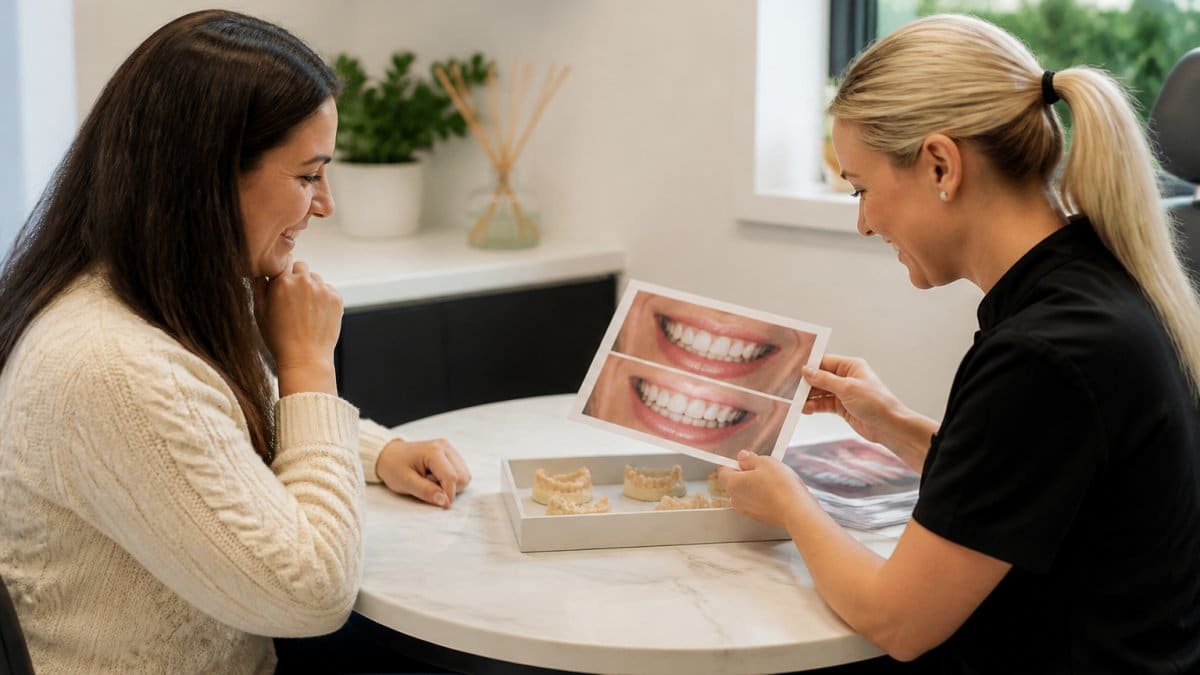
Planning a smile makeover starts with a consultation where your dentist listens to what bothers you most and what results you want. This preview helps you visualise the end result before committing to treatment.
The timeline for a smile makeover varies widely. Your dentist will break the plan into phases so you see progress along the way.
A smile makeover requires commitment. You’ll attend multiple appointments, follow aftercare instructions carefully, and potentially adjust your habits (avoiding staining foods, wearing a night guard if you grind your teeth). But patients who complete a planned smile makeover often report the investment paid off in confidence and satisfaction.
| Treatment | Timeline | Durability | Best For |
|---|---|---|---|
| Professional whitening | 1-2 weeks | 6-12 months | Surface stains, quick results |
| Composite bonding | 1 appointment | 5-10 years | Small chips, gaps, minor imperfections |
| Porcelain veneers | 2-3 appointments | 10-15 years | Severe discolouration, uneven teeth, multiple concerns |
| Orthodontics | 12-24 months | Permanent | Crowding, spacing, bite alignment |
| Dental implants | 3-6 months | 10-20+ years | Missing teeth, tooth loss |
Other Popular Cosmetic Procedures: Orthodontics and Dental Implants
Orthodontics, braces or clear aligners, straightens crooked or crowded teeth. Traditional braces use brackets and wires; clear aligners like Invisalign are removable trays that gradually shift teeth into alignment. Both work well for cosmetic and functional improvements, though clear aligners appeal to adults who prefer a less visible option.
Clear aligners are removable trays that gradually shift teeth into alignment. You wear each set of trays for one to two weeks before moving to the next. The process is gentler than traditional braces, with less discomfort, though some people experience mild pressure or temporary speech changes.
Traditional braces use brackets and wires. The main drawback is visibility, brackets and wires are noticeable, though tooth-coloured options exist.
Dental implants replace missing teeth with artificial tooth roots and crowns. An implant is surgically placed into your jawbone, left to integrate for several months, then topped with a custom crown that looks and functions like a natural tooth. Implants are durable, long-lasting, and prevent bone loss that occurs when teeth are missing.
Implants are the most invasive cosmetic dental treatment, requiring surgery and a healing period of three to six months. They’re also the most expensive option. But they’re permanent, don’t require the maintenance that dentures do, and feel and look like natural teeth.
Clear aligners suit adults with mild to moderate crowding who want a discreet option and are disciplined about wearing their trays. Dental implants suit patients with missing teeth who want a permanent, natural-looking solution and can commit to the healing timeline and cost.
Choosing the Right Treatment: Suitability, Risks, and Realistic Expectations
Choosing the right cosmetic dental treatment depends on what concerns you most, your timeline, your budget, and your comfort with irreversible changes. Here’s how to think through the decision.
Start by identifying your main concern. Are your teeth yellowed but otherwise straight and healthy? Professional whitening might be all you need. Are there chips or small gaps?
Consider your timeline. If you need results in weeks, whitening or bonding work fast.
Think honestly about permanence. Veneers and implants are essentially permanent, you’re committing to that look for years.
Risks vary by treatment. Whitening can increase sensitivity temporarily. Bonding wears faster than veneers. Veneers require enamel removal. Orthodontics take time and require discipline. Implants involve surgery and healing.
Realistic expectations matter enormously. A smile makeover can transform how you look and feel, but it won’t change your life in ways unrelated to your smile.
Many patients find that a consultation with a dentist experienced in cosmetic work clarifies the decision. You’ll see what’s possible and understand the trade-offs.
A smile you feel proud of shapes your confidence in ways that extend far beyond appearance.
At Smile Design Studio, we prioritise your comfort, safety, and informed decision-making throughout every cosmetic dental treatment. We specialise in creating personalised treatment plans tailored to your specific needs and goals, ensuring your smile transformation aligns with how you want to look and feel. Learn more about cosmetic dental treatments and consultation options to book your appointment and take the first step toward the smile that gives you genuine confidence.
Frequently Asked Questions
Which cosmetic dental treatment is best for improving confidence?
The best treatment depends on your specific concern. Professional teeth whitening works quickly for discoloured teeth and costs less than other options. Composite bonding suits chipped or gapped teeth needing immediate results. Porcelain veneers provide long-lasting transformation for multiple imperfections. A smile makeover combines several treatments for comprehensive change. A consultation with your dentist helps identify which approach matches your goals, timeline, and budget.
How long do cosmetic dental treatments last?
Longevity varies by treatment. Professional whitening results typically last 6-12 months depending on diet and habits. Composite bonding lasts with proper care. Porcelain veneers last for many years. Dental implants are long-lasting with good maintenance. Orthodontics produce permanent results once treatment finishes, though retention requires a retainer. Your dentist will explain aftercare needs during your consultation.
What should I ask a dentist before choosing a cosmetic dental treatment?
Ask about suitability for your teeth and gums, realistic outcomes for your specific concern, treatment timeline and recovery, maintenance and aftercare requirements, potential risks or side effects, how results compare to alternatives, and what happens if you’re unhappy with the result. Request before-and-after examples. Discuss your budget and whether treatment fits your lifestyle. A good dentist will answer honestly, including limitations, not just benefits.
Can teeth whitening make a noticeable difference to your smile?
Yes. Professional teeth whitening can lighten teeth by several shades, making a visible difference to your overall smile. Results depend on your starting shade and the cause of discolouration, surface stains respond better than deep internal staining. Professional whitening is stronger than shop-bought kits and produces more consistent results. However, results are temporary and require maintenance. Your dentist can assess whether whitening alone will meet your goals or if combining it with other treatments suits you better.
Related posts