Is Cosmetic Dentistry Painful for Adults? A Calm Guide
Is Cosmetic Dentistry Painful for Adults? A Calm Guide
Last Updated: November 2, 2026
Quick Summary
Most cosmetic dentistry is milder than people fear, usually involving a few minutes of numbness, mild tenderness, and a return to normal eating within days. Whitening and bonding are typically the gentlest options, while veneers and gum reshaping may leave you tender for a few days.
- Whitening usually needs no drilling or injections and causes only temporary sensitivity for one to three days.
- Dental bonding often needs no numbing and most people return to normal eating immediately.
- Veneers use local anaesthesia, with mild soreness around the gum line for two to five days.
- Gum reshaping is numbed first, and tenderness usually settles within a week.
- Tell your dentist about sensitivity or dental anxiety at the consultation so they can plan pain management.
Table of Contents
- What Adults Should Expect From Cosmetic Dentistry Comfort
- Before, During and After: Your Appointment Step by Step
- A Procedure-by-Procedure Discomfort Comparison
- Is Teeth Whitening Painful for Sensitive Teeth?
- Are Veneers Painful, and What About Dental Bonding?
- Gum Reshaping Pain and What It Feels Like Afterwards
- Cosmetic Dentistry Recovery Time and Practical Aftercare
- Pain-Control Options and What to Ask Your Dentist
- Frequently Asked Questions
What Adults Should Expect From Cosmetic Dentistry Comfort
Most cosmetic dentistry is far milder than the horror stories suggest. Many adults put off treatment for years because they expect agony. The reality for most cosmetic procedures is usually a few minutes of numbness, some mild tenderness, and a return to normal eating within days. Below, we explain what each procedure actually feels like, how to manage discomfort, and when soreness is worth a phone call.
Why Most Cosmetic Treatment Is Milder Than People Fear
The word “cosmetic” makes people picture drills and needles. But much cosmetic work sits at the gentle end of the dental scale.
Many treatments are non-invasive. Whitening involves a gel and a tray. Dental bonding adds a small amount of resin to the tooth surface. Neither needs a drill in most cases.
Even an invasive procedure like veneers usually works on the outer enamel, which has far fewer nerve endings than the inner tooth.
A common mistake is assuming all cosmetic work means deep drilling. It rarely does.
- Whitening: usually no drilling, no injections
- Bonding: often no numbing needed
- Gum reshaping: local numbing is commonly used
- Veneers: local numbing is commonly used, and some enamel is removed
The treatment extent matters more than the label. A single tooth is not the same as a full smile makeover.
Adult-Specific Factors That Change How Much It Hurts
Discomfort is not the same for every adult. Several personal factors shift the experience.
Tooth sensitivity is the big one. If cold drinks already make you wince, whitening may sting more for you than for someone without it. Older adults often have more worn enamel, which exposes the sensitive layer underneath.
Gum recession plays a part too. As gums pull back with age, the softer root surface is exposed. That area reacts more to gel and to temperature.
Dental anxiety amplifies pain. Adults who fear the dentist tend to tense up, hold their breath, and notice every sensation. Calm, unhurried appointments make a real difference here.
Medical factors also count. Some medications dry the mouth, and dry mouths feel more sensitive. If you grind your teeth at night, your teeth may already be tender before treatment starts.
Tell your dentist about all of this at the consultation, as it can change how they plan your pain management.
Before, During and After: Your Appointment Step by Step
A typical cosmetic appointment follows a predictable pattern, and knowing it removes most of the fear. Here is how a visit usually unfolds at our practice.

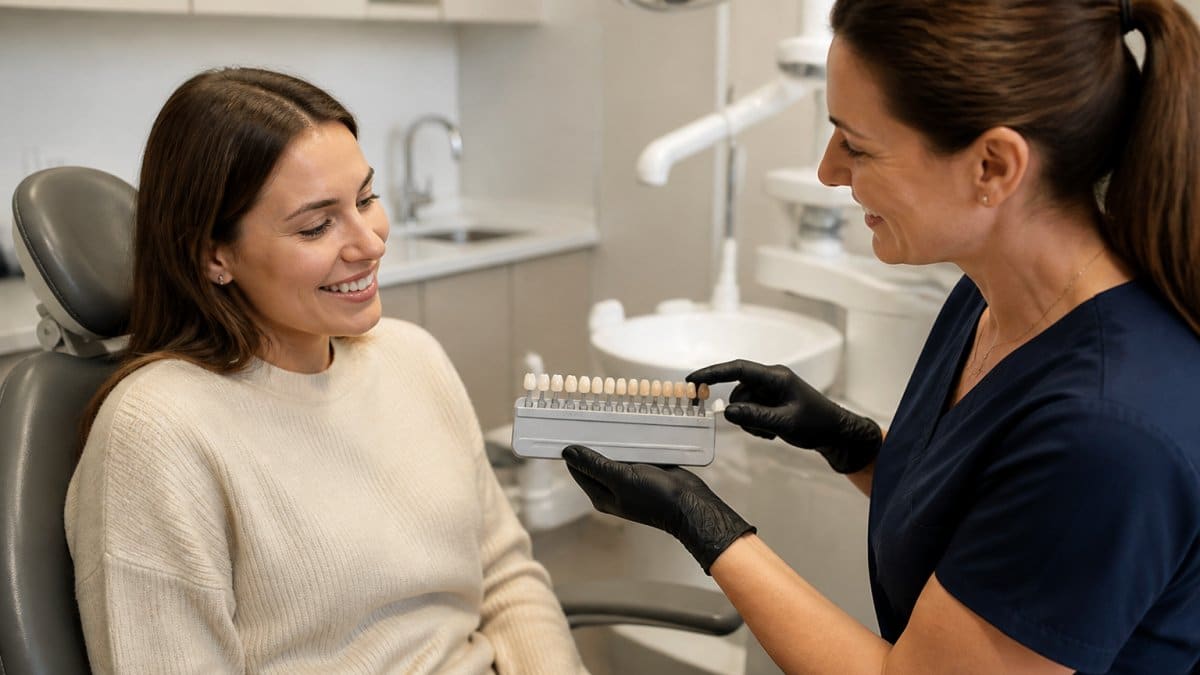
Before. You discuss your goals and concerns. A dentist typically examines your teeth, checks your gums, and explains your treatment options. This is when you mention sensitivity or anxiety. Ask about numbing options before anything begins.
During. Most discomfort comes from the injection itself, and even that is brief. Numbing gel is commonly applied first, and anaesthesia is often delivered slowly.
After. Numbness usually fades over a few hours. You may notice mild tenderness or irritation around the gums. Soft food and a warm drink can help.
If you would like to know exactly what happens at a visit, read our guide to what to expect at a cosmetic dental clinic before you book.
A Procedure-by-Procedure Discomfort Comparison
Discomfort varies widely by procedure, and this is the part most guides skip.
| Procedure | Numbing Needed | During Treatment | After Treatment | Typical Recovery |
|---|---|---|---|---|
| Teeth whitening | No | Cool gel, mild tingling | Temporary sensitivity, 1-3 days | Same day |
| Dental bonding | Sometimes | Pressure only | Little to none | Same day |
| Veneers | Yes | Pressure, no sharp pain | Mild soreness, 2-5 days | 1 week |
| Gum reshaping | Yes | Pressure only | Tenderness, 3-7 days | 1 week |
| Metal-free restorations | Yes | Pressure, no sharp pain | Sensitivity, 1-2 weeks | 1-2 weeks |
Teeth whitening. The gel can open microscopic pores in the enamel so the bleaching agent reaches stains. You can book the whitening service discussed in this comparison.
Dental bonding. Bonding adds resin to the tooth surface. In most cases no enamel is removed, so there is no nerve exposure and often no need for numbing.
Veneers. Veneers generally require removal of a thin layer of enamel to make room for the restoration, which is why local anaesthesia is typically used.
Gum reshaping. Gum contouring can be carried out with a laser or fine scalpel. The area is usually numbed first, so the procedure itself is typically comfortable.
Metal-free restorations. Crowns and inlays generally require some tooth preparation, so numbing is typically used.
In general, the more invasive the work, that is, the more enamel or gum tissue is altered, the longer the recovery tends to be. Whitening and bonding are typically the gentlest options.
Is Teeth Whitening Painful for Sensitive Teeth?
Whitening is not painful in the way people fear, but it can cause tooth sensitivity in adults who already have it. The gel opens tiny pores in the enamel, a process called demineralisation, and that lets the nerve react to hot and cold.
The type of whitening matters. In-chair whitening uses a stronger gel, often activated by light, and produces faster results but a higher chance of transient sensitivity. Take-home kits typically use a lower-strength gel in a custom tray, so sensitivity is usually milder but results take longer.
If your teeth are sensitive, several things help:
- Use a sensitive-teeth toothpaste for two weeks before treatment
- Ask for a lower-strength gel or a shorter session
- Space sessions out rather than doing them back to back
- Avoid very cold drinks for a day afterwards
- Consider a fluoride varnish or desensitising agent before whitening
The good news is that sensitivity from whitening is temporary. It settles once the enamel re-mineralises, usually within one to three days.
If previous whitening has made your teeth worse, read about why whitening causes sensitivity so you understand the cause before your next session. You can also learn how to manage sensitive teeth during whitening with practical steps that make treatment far more comfortable.
Are Veneers Painful, and What About Dental Bonding?
Veneers involve some enamel removal, so local anaesthesia is typically used. During the procedure you may feel pressure rather than pain. Afterwards, many adults report mild soreness and tenderness around the gum line for a few days. Some notice sensitivity to cold while the teeth settle, which usually eases within a week or two.
Dental bonding is generally the gentler option, and in many cases it needs no numbing. The resin is added to the tooth and shaped by hand, so drilling is often not needed. You may feel a little irritation where the gum meets the tooth.
In general, the difference comes down to how much tooth is altered. Bonding adds material, while veneers reshape the tooth. Less reshaping typically means less post-treatment soreness.
Gum Reshaping Pain and What It Feels Like Afterwards
Gum reshaping, sometimes called gum contouring, can use a laser or a fine scalpel to even out the gum line. The area is usually numbed first, so the procedure itself is typically comfortable, with pressure and perhaps a warm sensation.
Afterwards, gum reshaping pain is often described as tenderness rather than pain. Your gums may feel sore and look a little swollen for a few days.
Practical steps that help:
- Rinse gently with warm salt water from day two
- Avoid spicy or very hot food for a few days
- Brush softly around the treated area
- Take over-the-counter pain relief if needed
Most tenderness settles within a week. If soreness worsens after day three, call your dentist.
Cosmetic Dentistry Recovery Time and Practical Aftercare
Cosmetic dentistry recovery time depends on the procedure, but most adults are typically back to normal routines quickly. Whitening and bonding usually need little or no downtime. Veneers and gum work may leave you tender for a few days, and restorations can take a couple of weeks to settle.
Good aftercare speeds things up. Follow these habits:
- Stick to soft, cool food for the first 24 hours after invasive work
- Avoid staining food and drink for a few days after whitening
- Use a soft toothbrush and gentle pressure
- Keep up your normal brushing and flossing routine
- Attend any follow-up appointment your dentist recommends
Skipping aftercare instructions after veneers or gum work can prolong temporary discomfort and slow healing, so follow the plan you are given.
Pain-Control Options and What to Ask Your Dentist
You have more control over comfort than you might think. Pain management in modern dentistry goes well beyond a single injection.
Options commonly used in dentistry include:
- Numbing gel before any injection
- Slow delivery of local anaesthesia to reduce stinging
- Breaks during treatment whenever you raise your hand
- Shorter sessions for anxious patients
- Clear signals agreed in advance so you can pause
Adults with dental anxiety should say so at the start. A calm, patient-centred practice will adjust the pace and explain each step. If you are nervous about discomfort, our guide to finding a gentle dentist explains what to look for and what to ask.
Questions worth asking at your consultation:
- Will this procedure need numbing?
- How much soreness should I expect, and for how long?
- What should I do if the sensitivity does not settle?
- Can we split treatment across more than one visit?
Normal temporary sensitivity fades within days and eases each day. Warning signs to report include pain that gets worse after day three, swelling that grows, bleeding that will not stop, or a tooth that feels loose. Those are not routine and need a check.
Frequently Asked Questions
Does cosmetic dentistry hurt during the procedure?
Most cosmetic dentistry is carried out with a local anaesthetic, so the treatment area is numbed and you should feel pressure rather than pain. You may notice vibration, water spray and the sound of instruments, which some adults find unsettling even when nothing hurts. If you feel anything sharp, raise your hand and the dentist can top up the numbing. Tell your dentist about dental anxiety at booking so the appointment can be paced around you.
How long does discomfort last after cosmetic dental treatment?
Cosmetic dentistry recovery time varies by procedure. Bonding and professional whitening usually settle within a few days, while veneers and gum reshaping can leave gums tender for around a week. Sensitivity to hot and cold often fades gradually over one to two weeks. If soreness is getting worse rather than better after that point, or you have swelling or a loose restoration, contact your practice rather than waiting.
Is teeth whitening painful, and can a dentist numb the area?
Teeth whitening does not usually cause pain, but it commonly triggers short-lived tooth sensitivity, especially if you already have sensitive teeth or worn enamel. A dentist can often adjust the strength of the whitening agent, apply a desensitising gel, and space sessions out. Numbing is not typically used for whitening because the discomfort comes from the tooth nerve rather than the gum surface, so the practical fix is a gentler protocol.
Are veneers painful to have fitted?
Fitting veneers is often comfortable because the teeth and gums are typically numbed while a thin layer of enamel is prepared. Afterwards, many adults report mild tenderness and sensitivity around the treated teeth for a few days, particularly with metal-free restorations that sit close to the gum line. If you have had uncomfortable veneers elsewhere, ask about the preparation technique and how the bite will be checked before anything permanent is bonded.
Cosmetic treatment should feel manageable, not frightening. If fear of pain has kept you away, we would rather talk it through than have you wait another year. At Smile Design Studio, our patient-centred approach puts comfort and clear communication first, with personalised treatment plans and calm, unhurried appointments for nervous patients. Get started with Smile Design Studio and book a consultation to discuss your options with a team that takes your concerns seriously.

Related posts